Why Billions Are Pouring Into Prince George, and What It Means for Home Prices
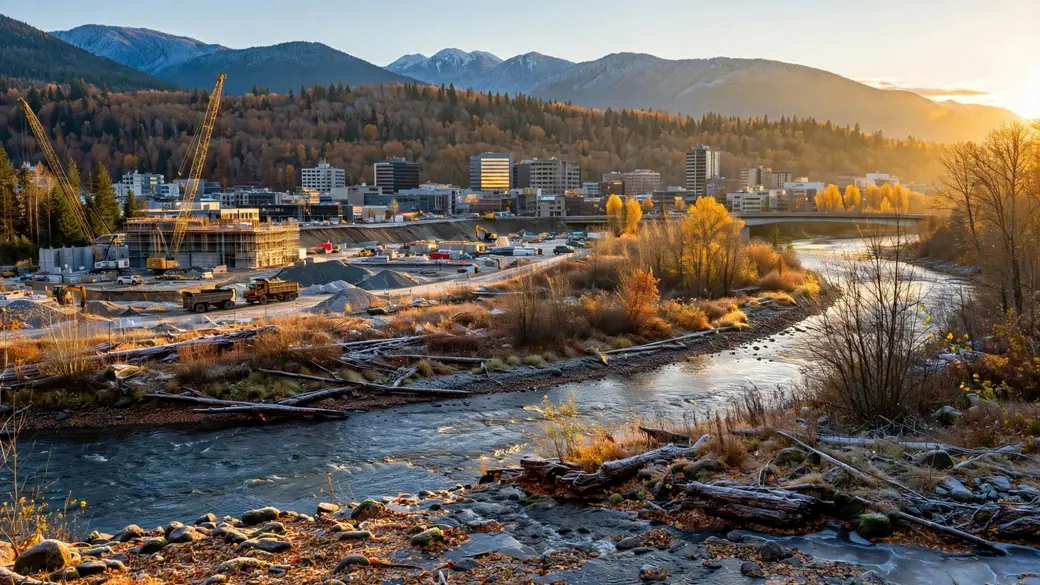
Billions are flowing into Prince George because three checked projects are actually under construction: a $6 billion power line, a $1.579 billion hospital tower, and a $1.44 billion mine expansion. Together they are worth about $9 billion, and they bring construction workers, permanent jobs, and housing demand to a city of about 77,000 people.
You have probably heard the talk. Prince George is booming. Billions are coming. Prices are going up. This article sticks to the three projects I have checked against a primary source, with a link you can check yourself.
Here is the short version. The money is real, but it arrives slowly, over years, not weeks. Construction workers need rentals first. Permanent staff buy homes second. If you are buying in Prince George right now, the boom is a reason to get prepared, not a reason to panic buy.
What is the North Coast Transmission Line, and why does it start in Prince George?
The North Coast Transmission Line is a BC Hydro project that will carry more power from Prince George to Terrace and the northwest coast. Phase 1 broke ground on September 3, 2026. It is a 165 kilometre, 500 kilovolt line from the Williston Substation to Glenannan, and BC Hydro estimates the first two phases at about $6 billion.
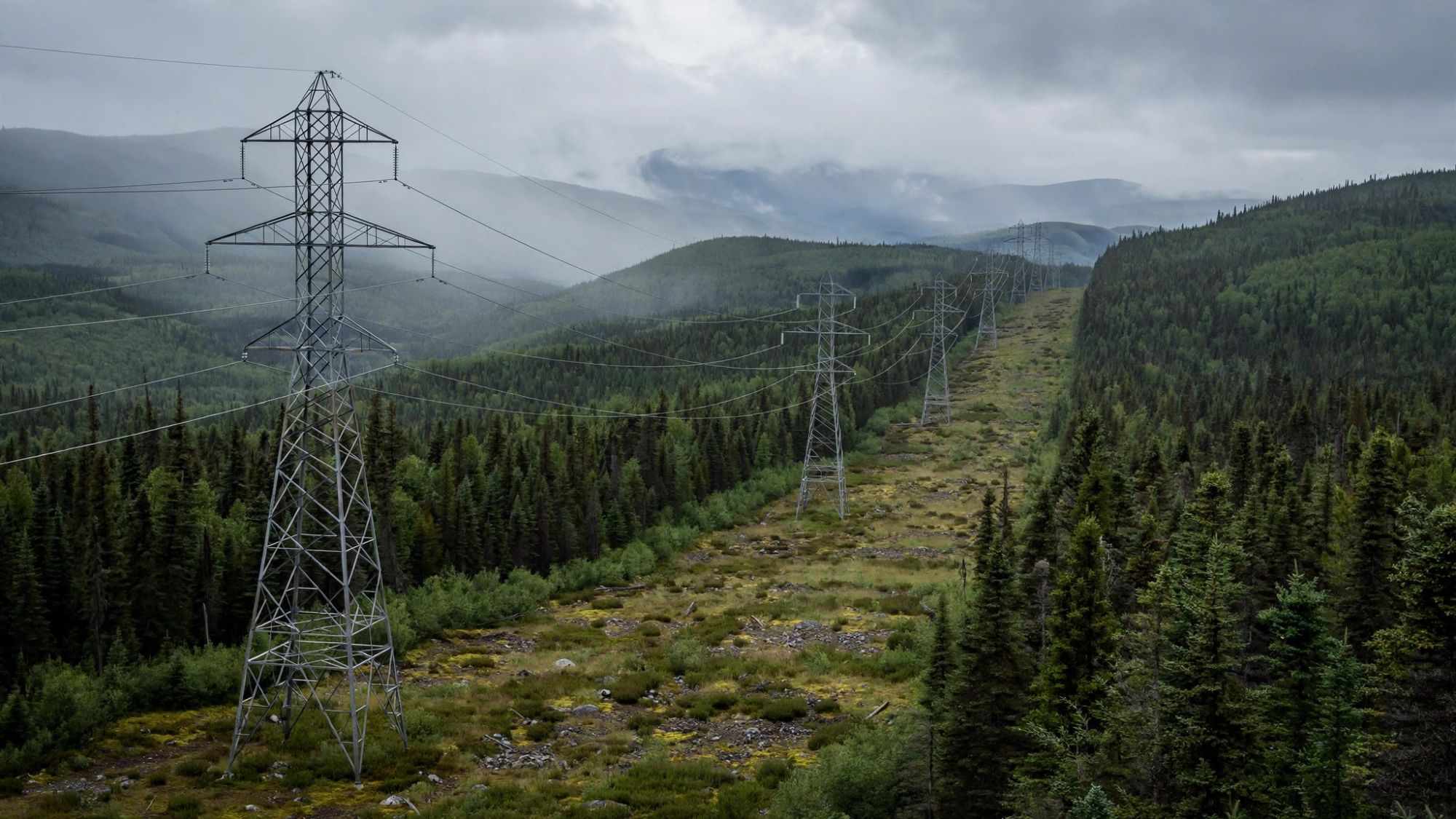
Generated illustration of a transmission line corridor near Prince George, not an exact replica.
This is the biggest of the three projects, and it is the one that starts closest to home. The groundbreaking happened right here in Prince George on September 3, 2026, with the federal and provincial governments, BC Hydro, and Indigenous partners on site. Phase 1 runs 165 kilometres from the Williston Substation near Prince George to the Glenannan Substation near Fraser Lake. BC Hydro says Phase 1 is targeted to enter service in fall 2030, with Phase 2 reaching Terrace after that.
The funding picture is worth understanding, because it shows how serious this is. Canada and British Columbia committed $3.9 billion toward phases 1 and 2 under the Canada-British Columbia Cooperative Prosperity Agreement signed in July 2026. The Canada Infrastructure Bank loaned BC Hydro $139.5 million in November 2025 for early work, including engineering, route clearing, and First Nations consultations. The federal government estimates the project could create about $10 billion in new economic activity and nearly 10,000 jobs. That is the government's estimate, not a measured result, and I am labelling it that way on purpose.
Why does a power line matter to home prices? Because the line is the thing that unlocks everything else. Mines and LNG plants on the northwest coast need power before they can build. BC Hydro says the line will more than double the electricity that can be sent from Prince George to Terrace and beyond. That is why the line begins in Prince George, and why the construction workforce, the engineering offices, and the supply chain all touch Prince George first.
Sources: Government of Canada, Natural Resources Canada, BC Hydro, Prince George to Glenannan Transmission Project.
What is the UHNBC Acute Care Tower, and when does it open?
The UHNBC Acute Care Tower is a $1.579 billion, 11 storey hospital tower at the University Hospital of Northern British Columbia. It will add 211 beds for surgery, cardiac care, and mental health, with 12 new operating suites. Main construction is expected to begin in early 2027, and the tower is scheduled to open to patients in winter 2031.
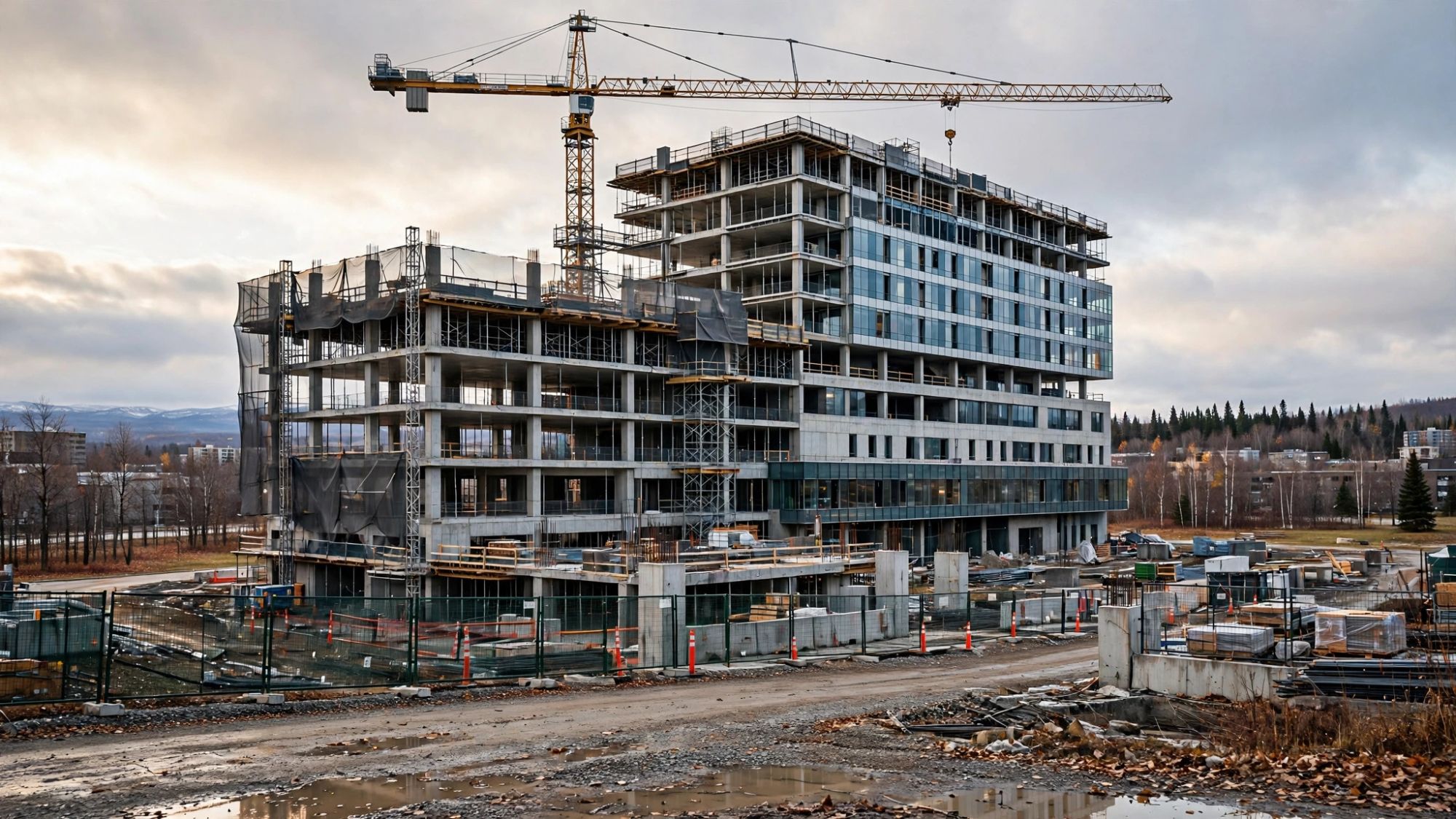
Generated illustration of the UHNBC Acute Care Tower, not an exact replica.
This is the project that changes Prince George itself, not just the region around it. The tower will more than double the beds for surgical, cardiac, and mental health services, from 102 beds today to 211. It replaces 102 existing beds and adds 109 new ones. The plan includes 12 operating suites, a 6 bed cardiac care unit, a 20 bed cardiac step down unit, two cardiac catheterization labs, and expanded mental health and substance use beds.
The work is already visible. A 471 space parkade opened in November 2025. The Northern Interior Health Unit moved to Parkwood Mall in August 2026 so its old building can come down and the tower can go up on that site, on the southeast corner of the hospital campus between Edmonton and Winnipeg streets. EllisDon is the construction contractor, working with DIALOG on design and with Northern Health, Infrastructure BC, PML, and Houle Electric under an alliance model. The business plan was approved in August 2024, and the project is supported by a contribution from the Fraser-Fort George Regional Hospital District.
For housing, the hospital tower matters in a different way than a mine or a power line. Hospital staff are permanent, well paid, and they buy homes near the hospital. The tower sits in the city, so its workforce lives in the city, shops in the city, and sends kids to city schools. That is steady demand, and it lasts decades after construction ends.
Sources: Northern Health, UHNBC Acute Care Tower project page, EllisDon.
What is happening at the Blackwater Gold Mine?
Blackwater is a gold and silver mine 160 kilometres southwest of Prince George, run by Artemis Gold. It poured its first gold in January 2025 and reached commercial production on May 1, 2025. A $1.44 billion expansion called EP2 began major construction in August 2026 and will lift processing from 6 to 21 million tonnes a year by late 2028.

Generated illustration of the Blackwater Gold Mine, not an exact replica.
Blackwater is the project most people outside the mining world have not heard of, and it is the one furthest along. The mine is already operating. Phase 1A, the first expansion, lifts processing from 6 to 8 million tonnes a year and is expected to reach commissioning in the fourth quarter of 2026. EP2, the bigger expansion, started major works construction on August 4, 2026, ahead of schedule, with the first concrete poured for the ball mill foundations. When EP2 is complete, the mine will process 21 million tonnes a year and produce more than 500,000 ounces of gold a year, which would make it one of the three largest single gold mines in Canada.
The workforce numbers are the part that touches Prince George housing. EP2 is expected to generate about 1,500 direct construction jobs at peak, plus a 612 bed construction camp expansion. Once the expansion is running, Artemis expects about 1,200 direct employees and contractors on site. Many of those workers live in Prince George or pass through it, and the mine is close enough that the city is its natural service and supply hub.
Source: Artemis Gold, news release, August 4, 2026.
How do the three projects compare?
Here are the three checked projects side by side. Together they are worth about $9 billion, and each one is at a different stage.
| Project | What it is | Checked cost | Key dates | Workforce |
|---|---|---|---|---|
| North Coast Transmission Line | 165 km, 500 kV power line, Williston to Glenannan | About $6 billion, phases 1 and 2, BC Hydro estimate | Broke ground Sept 3, 2026. Phase 1 in service fall 2030. | Federal estimate: about $10 billion in new economic activity, nearly 10,000 jobs |
| UHNBC Acute Care Tower | 11 storey hospital tower, 211 beds, 12 operating suites | $1.579 billion | Main construction early 2027. Opens to patients winter 2031. | Permanent hospital staff, no verified job total published |
| Blackwater Gold Mine, EP2 | Mine expansion, processing from 6 to 21 million tonnes a year | $1.44 billion | Major works began Aug 4, 2026. Complete by Q4 2028. | About 1,500 peak construction jobs, about 1,200 permanent jobs |
How do big projects like these actually move home prices in Prince George?
Big projects move home prices through people, not headlines. Construction workers need rentals, permanent staff buy homes, and suppliers open local offices. In a city of 77,000 people, a few thousand extra workers can tighten a rental market that already sits at 4.3 percent vacancy. That pressure shows up in rents first, and in prices second, over years, not weeks.
The mechanism is simple, and it is worth saying plainly because it is where most boom talk goes wrong. A headline about billions does not raise your home value the next morning. What raises values is a worker who needs a place to live, signs a lease, and then decides to stay and buy. That chain takes months to show up in rents and years to show up in prices.
Prince George starts from a tight position. The city has about 76,708 people, and the metro area about 89,490, according to the 2021 Census. The rental vacancy rate was 4.3 percent in the October 2025 CMHC survey, with two bedroom vacancy at 3.7 percent. Average rent was $1,354. On the sales side, the average detached home in Prince George sold for $539,144 in the first nine months of 2026, across 656 sales, according to the BC Northern Real Estate Board. The benchmark price was $435,100 in October 2026, with 5.0 months of inventory and a median of 25 days on market in the third quarter of 2026. That is a balanced market with a tight rental side, which is exactly the setup where added workforce demand shows up first in rents.
The other thing to know is timing. These three projects do not all peak at once. Blackwater construction peaks first, over the next two years. The transmission line runs through 2030 and beyond. The hospital tower opens in 2031. That staggered schedule is good news for the city, because it spreads the demand instead of dumping it all in one year, and it is good news for buyers, because there is no single deadline to beat.
What does this mean for rents and investors?
For investors, the honest answer is that the setup looks favourable but the payoff is not guaranteed. Average rent was $1,354 in October 2025, with vacancy at 4.3 percent, and the benchmark home price was $435,100 in October 2026. More workers should support rents, but a project delay, a rate hike, or a softening market can change the math fast.
If you own a rental in Prince George, or you are thinking about buying one, here is how I would read it. The demand side is real: construction camps hold some workers, but many prefer a rental in town, and permanent staff almost always rent first and buy later. The risk side is also real. A mine expansion can be delayed. A transmission line can run over budget. Interest rates can move. None of those risks cancels the opportunity, but all of them mean the deal has to work on today's numbers, not on a forecast.
My rule for investment property in this market has not changed, and I wrote a full article on it last week. Run the numbers with today's rent, today's rate, and today's vacancy. If the property cash flows or comes close on those numbers, the projects are upside. If it only works when rents jump 20 percent, walk away. The boom is a tailwind, not a business plan.
What should buyers do now, and what should they not do?
Buyers should treat the boom as a reason to get prepared, not a reason to rush. Get pre-approved for a payment you can live with, watch neighbourhoods near the hospital and the construction corridors, and buy a home that works if the big projects run late. If a deal only works when everything goes right, it is the wrong deal.
- Get pre-approved for a payment, not a maximum. The pre-approval trap is real: the bank tells you the most you can borrow, and that number is almost never the number you can live with comfortably. Decide your monthly payment first, then shop inside it.
- Watch the hospital area and the rental-heavy neighbourhoods. The tower brings permanent staff, and staff buy near work. The VLA and Millar Addition have long been investor zones, and College Heights keeps drawing families. None of that is a guarantee, it is a place to start looking.
- Do not buy on a forecast. Buy on today's rent, today's rate, and today's price. If a deal only works when prices jump, it is the wrong deal.
- Relocators, start early. If you are moving from Vancouver, Calgary, or Toronto, the price gap is real, but the neighbourhoods are not interchangeable. A tour, a guide, and a local conversation save more money than any headline.
The bottom line
Billions are pouring into Prince George, and for once the phrase is backed by construction you can drive past. A power line broke ground in September. A hospital tower is going up on the UHNBC campus. A gold mine southwest of the city is expanding into one of the largest in Canada. Together they are worth about $9 billion, and they will bring thousands of workers to a city of about 77,000 people over the next five years.
That is a real tailwind for Prince George housing. It is not a guarantee, and it is not a deadline. The buyers who do well in a market like this are the ones who get prepared early, buy a home that works on today's numbers, and let the boom be the bonus, not the plan.
Evan McLeish and Marc Posselt are Prince George REALTORS with EMP Collective, eXp Realty. If you are thinking about buying, selling, or investing in Prince George, start with the resources below.
Talk to us!
Thinking about buying, selling, or investing while these projects are underway? We will give you a straight answer, with the latest numbers for your neighbourhood.
Get the Home Buyer Guide and select your program
Call Evan at 778-910-9655 or Call Marc at 250-251-5800. Evan McLeish and Marc Posselt, Prince George REALTORS with EMP Collective, eXp Realty.
Categories
Recent Posts