Permanent Wood Foundations in Prince George: What Every Buyer Needs to Know
Permanent Wood Foundations in Prince George: What Every Buyer Needs to Know
If you are buying a house in Prince George and you have ever seen the words "permanent wood foundation" on a listing and thought, "wait, is the basement literally made of wood?" the answer is yes. And your next question should be: "Is that a problem?".
In Northern BC, these foundations often called PWFs are not a cost-cutting measure or a workaround. They are a sophisticated, engineered response to our specific environment. To understand why they are so common here, you have to look at the ground beneath your feet. Prince George sits on the floor of the ancient Glacial Lake Prince George, which left behind deep layers of silts and clays. This soil is notorious for frost heave and lateral pressure, which can wreak havoc on traditional concrete.
A properly built PWF isn't just a "wood box" in the ground. It is a managed, code-compliant system designed to last 100 years. Here is everything you need to know to buy with confidence.
- The Science of the "Floating Foundation"
The biggest surprise for most buyers is that a wood foundation often outperforms concrete when it comes to moisture. Concrete is capillary, meaning it actually acts like a sponge, drawing moisture up from the soil into your basement walls. This is why so many older concrete basements in Prince George feel damp or smell musty.
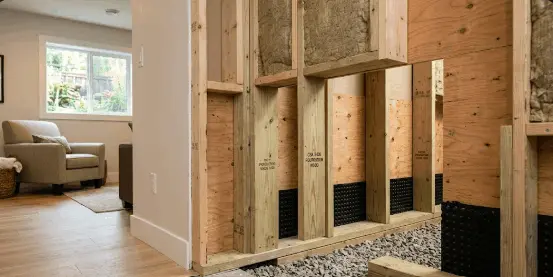
A PWF eliminates the concrete footing entirely. Instead, the wood footing plate sits on a bed of compacted crushed stone. Because water cannot wick upward through stone and air gaps, you get what engineers call hydrostatic relief. Any groundwater that hits the stone bed simply drains away to a sump or daylight drain rather than building up pressure against your walls. This results in a basement that is naturally warmer and drier. Furthermore, because the walls are built with 2x6 or 2x8 studs, you can insulate them to R-20 without losing any interior square footage to extra furring walls.
Deep Dive
If you have spent any time in a conventional concrete basement in Northern BC, you know "the smell." It is that musty, slightly damp odor that seems to cling to everything stored downstairs. Most people accept this as an inevitable part of living "below grade." But when you live in Prince George, this issue isn't just an annoyance; it is a direct result of our unique geotechnical history and the fundamental properties of concrete. To understand why a Permanent Wood Foundation (PWF) is often the superior choice for our environment, we have to look at the ground beneath your potential home and the physics of moisture transfer.
Thousands of years ago, the area that is now Prince George sat at the bottom of the massive Glacial Lake Prince George. As the glaciers melted, they deposited deep layers of extremely fine silts and heavy clays throughout the region. This is the soil that supports (or, in many cases, fails to support) the foundations of our homes. The problem with this glacial clay is that it is highly expansive and incredibly restrictive to drainage. It absorbs huge amounts of water and holds onto it, creating significant lateral pressure against foundation walls. It is also the perfect setup for frost heave, as that trapped water freezes and expands, pushing upward on the structure above. This combination of pressure and movement is what leads to the classic cracking and bowing issues seen in many older Prince George concrete foundations.
Enter the traditional concrete foundation: a heavy, dense material that seems like the ultimate barrier. The problem is, concrete is actually capillary. This is a scientific way of saying that it acts like a sponge. At a microscopic level, concrete is filled with tiny interconnected pores. When placed against damp, dense clay, it will actually wick moisture from the soil and pull it right through the wall to the interior. As that moisture reaches the warmer, drier air of your basement, it evaporates, which is what causes that persistent, musty smell. No amount of exterior "tarring" or "damp-proofing" (which is often just a thin layer of asphalt) can truly stop this capillary action for the life of the structure.
A PWF turns this entire equation on its head by eliminating concrete from the equation entirely, creating what engineers refer to as a "managed drainage system." A PWF wall sits not on a solid concrete footing, but on a substantial bed of compacted crushed stone or gravel, typically four to six inches deep. This stone bed serves a critical, two-part function. First, stone is non-capillary. Water cannot travel upward against gravity through air gaps. This immediately cuts off the moisture wicking that plagues concrete. Second, this stone layer provides hydrostatic relief. If groundwater levels rise (say, during a heavy spring snowmelt in the Hart), it cannot pool or build up pressure against the wall. Instead, it moves naturally through the gravel bed, which is designed to direct it away from the foundation and toward a sump pump or a gravity drain that outlets to daylight. This creates a foundation that is actively managing water, rather than just trying to block it.
This "no concrete" construction also offers incredible benefits for energy efficiency and comfort. Because a PWF wall is built using familiar 2x6 or 2x8 dimensional lumber, it handles insulation perfectly. Instead of adding furring strips to the inside of a concrete wall (which steals valuable interior space) and only getting R-12 insulation, you can insulate a PWF wall to full-depth R-20 or greater between the studs. The result is a basement that doesn't just "feel" warm, it is physically warmer because you are not living inside a massive concrete heat sink that is constantly bleeding warmth into the 4°C (40°F) surrounding soil. A wood foundation is inherently warmer, drier, and more energy-efficient, making your basement as livable and comfortable as any other floor in your home.
- 2024/2025 Building Code Updates
If you are looking at newer construction in Prince George, the rules have recently changed to make these homes even safer. The 2024 BC Building Code now requires radon mitigation rough-ins for all new foundations. Prince George is in a moderate radon zone, and this rough-in ensures that if the gas is ever detected, a subfloor depressurization system can be easily hooked up.
Additionally, as of March 2025, there are enhanced lateral bracing requirements for seismic resilience. Even though we aren't on the coast, the code now mandates specific nailing patterns and galvanized anchor straps to ensure the house is structurally tied from the roof all the way to the footing. If you are buying a home built from 2025 onward, you should verify that the builder can produce documentation for these three things: radon rough-ins, seismic bracing, and Step Code compliance.
DEEP DIVE
If you are considering buying a home with a Permanent Wood Foundation (PWF) that was built recently, or if you are looking at new construction in Prince George, it is crucial to understand that the target has moved. Foundations are not built the same way today as they were ten, or even two, years ago. Building codes are constantly evolving documents, reflecting new research into safety, energy efficiency, and durability. In British Columbia, the landscape shifted significantly with the implementation of the 2024 BC Building Code, and several specific changes are critically important for the long-term health and safety of homes in our region. When you buy a modern PWF home, you are not just buying wood; you are buying a sophisticated system built to these rigorous new provincial and national standards.
The first major update that buyers must be aware of is the enhanced focus on radon mitigation. Radon is a naturally occurring, radioactive gas that is colorless, odorless, and tasteless. It is produced by the breakdown of uranium in soil and rock. Because radon is heavier than air, it tends to accumulate in the lowest levels of a structure, such as basements or crawlspaces. Long-term exposure to high levels of radon is the second leading cause of lung cancer in Canada, after smoking. The entire Prince George region is classified by Health Canada as being in a moderate radon zone, and many areas, depending on specific soil composition, have shown elevated levels.
The 2024 BC Building Code now mandates specific rough-in measures for radon mitigation in all new foundations, including PWFs. Builders must now install a conceptual "radon system." This involves several steps. First, they must place a specialized gas-tight membrane (often a high-performance poly sheet, often red or bright yellow to be easily identifiable) over the gravel drainage bed before the final floor is placed. Second, all penetrations through that membrane (like plumbing pipes) must be sealed with code-compliant gas-tight sealants. Finally, a "radon rough-in stack" must be installed. This is a dedicated 4-inch PVC pipe that extends from the sub-floor gravel layer all the way up through the roofline.
This rough-in stack is essentially future-proofing the home. When you take possession of a new home, the system is passive. However, the requirement allows the homeowner to perform a standard three-month radon test (typically during the winter season). If that test reveals radon levels above the Health Canada action guideline of 200 Bq/m³, a mechanical fan can be easily and inexpensively "activated" onto that existing pipe stack. This fan depressurizes the soil beneath the foundation membrane, actively pulling any radon gas out of the gravel and exhausting it safely into the atmosphere above the roof, preventing it from ever entering the livable space. When buying, always ask to see the radon membrane specifications and a picture of the stack before it was covered.
The second critical code change, which will significantly impact construction practices beginning March 2025, relates to seismic resilience and lateral bracing. In recent years, our provincial understanding of seismic risk has evolved. While we do not experience the frequent visible activity that coastal regions like Vancouver or Victoria do, geotechnical data indicates that Northern BC is capable of significant seismic events. Furthermore, we face tremendous lateral earth pressure from our native glacial clay soils.
The updated 2024 code, specifically section 9.23 (which governs conventional wood-frame construction), has introduced much more complex, engineered lateral bracing requirements. This code update essentially ensures that a house is "structurally tied" from the roof system, through the walls, and down to the foundation. This means builders can no longer rely on simple "toenailing" to connect walls to the foundation. The new standards mandate a series of specific, engineered connection points, including galvanized steel hurricane ties connecting the trusses to the top plates, enhanced nailing schedules for the exterior wall sheathing, and, most importantly, heavy-duty seismic anchor straps that are embedded into the foundation system and structurally bolted to the wall studs. This enhanced bracing must be continuous, creating a reliable, structural load path that ensures the building can withstand significant lateral forces without shifting, twisting, or collapsing. For any PWF construction from 2025 onward, you should expect to see these engineered connections and have structural verification provided by the builder.
- The 3-Point Forensic Inspection
When I take clients through a PWF home, we look for three specific things that most general home inspectors might miss. First is the "Never Under" Poly Rule. The exterior of the foundation is protected by a 6-mil polyethylene moisture barrier. This plastic must never wrap under the wood footing plate. If it does, it creates a "bag effect" where moisture pools against the wood, eventually leading to decay.
Second is the Fastener Test. The copper used to treat foundation-grade wood reacts chemically with standard galvanized nails, causing them to corrode and fail within 15 years. You want to see stainless steel fasteners or at least no signs of "rust bleeding" at the top plate of the foundation. Finally, we check for Structural Alignment. If a builder backfilled the soil before the first floor was properly attached, the wall can bow inward. Anything more than a half-inch of deflection is a major red flag that requires an engineer's review.
DEEP DIVE
When you are purchasing a home in Prince George with a Permanent Wood Foundation (PWF), relying on a standard, general home inspection is often insufficient. While general inspectors are excellent at identifying broad plumbing, electrical, or roofing issues, a PWF requires a specialized, almost forensic, approach. This is because a wood foundation is an engineered system where small deviations from acceptable practice can have significant, long-term structural consequences. General inspectors are often trained to spot issues that have already manifested, but a forensic approach seeks to identify latent defects, issues that were built into the structure and may not cause visible problems for 15 or 20 years. When I guide clients through a PWF home, we aren’t just looking at the finished walls, we are actively searching for "evidence" that three specific, critical structural standards were met during construction.
The first and arguably most common critical error we look for is related to moisture management, specifically the "Never Under" Poly Rule. We know that a properly built PWF is designed as a dynamic drainage system, where groundwater moves freely through a crushed stone footing and is directed away. This system is protected externally by a 6-mil polyethylene moisture barrier that runs down the outside of the wall, past the plywood sheathing, and over the stone drainage bed. A fatal, and distressingly common, builder error occurs when this plastic sheet is improperly installed by wrapping it all the way under the wood footing plate. This seemingly minor mistake completely destroys the engineering principle of hydrostatic relief. Instead of allowing the gravel to drain, the poly creates a "bag effect," trapping any ground moisture or incidental leakage directly against the structural wood footing. Because the poly prevents evaporation or drainage, this water pools, and the constantly saturated conditions will inevitably lead to wood rot, even in treated foundation-grade lumber, over 20 to 30 years.
To detect this, we search for areas where we can see the footing itself, typically where the utilities (like the main water line or sewage pipe) enter the foundation wall. Using a camera scope, or sometimes just by feeling the intersection of the footing and the drainage gravel, we can sometimes verify if that poly sheet runs vertically past the plate (correct) or makes a horizontal turn underneath it (incorrect). This is an "absolute" error, as there is no way to remediate it short of unearthing the entire house and lifting it off its foundation.
The second forensic checkpoint is the Fastener Corrosivity Test. This is a chemistry-based inspection that addresses the heart of the structure's longevity. The specialized wood used for PWF construction is pressure-treated with chemicals (traditionally Chromated Copper Arsenate (CCA), and now newer formulations like Alkaline Copper Quaternary (ACQ)). These treatments use high concentrations of copper, which is what makes the wood toxic to insects and fungi. However, copper is incredibly corrosive to standard galvanized steel nails. If a builder uses standard "hot-dip galvanized" nails to attach the plywood sheathing to the foundation studs, the copper in the wood will initiate a galvanic reaction, effectively eating away at the zinc coating and then the steel nail itself. Within 15 years, those standard nails can lose all their structural integrity, meaning the very sheathing that holds your foundation wall straight is now structurally disconnected from the frame.
We test this by finding exposed sections of the wall, often at the junction where the wood foundation wall meets the concrete floor slab or at the top plate near the joists. We aren't just looking for "rust." We are looking for specific bleeding patterns. Standard, surface rust is common. But "corrosivity bleeding" often looks like the head of the fastener is entirely gone, replaced by a circular, black, or blue-green reaction stain in the surrounding wood. If we see widespread bleeding, it indicates the wrong fasteners were used, a systematic failure that significantly shortens the lifespan of the foundation. Correct installation requires stainless steel fasteners, which are immune to this chemical reaction.
The final element of our forensic inspection is Structural Wall Deflection. Unlike concrete, which cracks when under stress, a wood wall is flexible and will bow, or "deflect," before it fails. As discussed, Prince George clays exert massive lateral pressure. This pressure is greatest during construction. A crucial code requirement states that a foundation wall cannot be backfilled with soil until the first-floor joist system is fully attached to the top of the foundation wall. This floor system acts as a rigid diaphragm, essentially "locking" the top of the wall in place. If a hurried builder backfills before this connection is secure, the soil pressure pushes the center of the wall inward. While the builder may later attach the floor, the structure is now permanently compromised.
We measure this by running a laser plane or a simple 8-foot builder's level vertically against the foundation studs. We are checking for perpendicularity. The allowable tolerance is typically only a half-inch of deflection over an eight-foot wall height. If we measure deflection beyond this threshold, it is a definitive structural defect. A bowed wall is already structurally compromised, with its load-bearing capacity reduced. While it may not collapse tomorrow, that wall will never perform as an engineer intended, and a failure could be triggered later by a significant freeze event or unexpected water saturation. If excessive deflection is found, the only path forward is to pause the transaction and engage a structural engineer for a formal, stamped review.
- Maintenance for a 100-Year Life
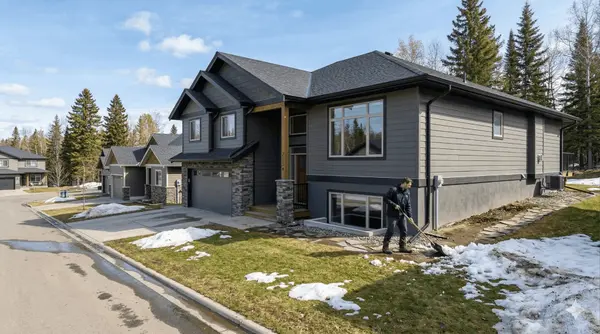
A wood foundation is a managed system, but the "chores" are simple. Rule number one is the 1.5-metre rule: in the winter, you must clear snow away from the foundation perimeter within a five-foot radius. Piled snow increases the moisture and lateral load on the wall during freeze-thaw cycles.
Rule number two is the grading rule. The ground should drop at least 6 inches over the first 10 feet away from your house. If your grade has shifted and water is running toward the house, you are putting unnecessary pressure on that moisture barrier. Lastly, the sump pump is the heart of the system. On a PWF home in Prince George, a functioning sump with a battery backup is not optional, it is the release valve for the entire design.
DEEP DIVE
The Owner’s Essential Playbook: Active Management for a 100-Year Wood Foundation
The single most important mindset shift for a homeowner purchasing a Permanent Wood Foundation (PWF) in Prince George is moving from a passive approach to an active one. With a traditional concrete foundation, homeowners often adopt a "set it and forget it" mentality, usually only reacting when a crack appears or water ingress occurs. A PWF, however, is not a static barrier; it is an engineered, dynamic moisture management system. It relies on specific, built-in components like the crushed stone footing, the specific 6-mil moisture barrier, and the treated lumber working together in harmony with the surrounding environment. Because it is a system, its long-term health is entirely dependent on regular, straightforward maintenance. If you manage the system properly, an engineered wood foundation is designed to easily exceed a 100-year lifespan, outlasting many concrete alternatives. But if you neglect it, you are actively undermining the engineering that keeps your basement warm and dry.
The "Playbook" for a PWF owner is straightforward, but its rules are non-negotiable. It begins on the exterior of the home, with surface water management. Rule number one is the 1.5-Metre Snow Clearance Rule. In Prince George, where heavy winter snowpack followed by rapid spring melt is the norm, this is critical. Snow is not just frozen water; it is a significant lateral load and an insulator. When snow piles high against a foundation wall, it prevents the ground immediately surrounding the house from freezing completely. When a mid-winter thaw or spring rain occurs, that water cannot saturate the frozen ground further out, so it flows directly toward the house. As it hits the snowbank against your foundation, it is trapped, creating a concentrated "super-saturation" zone directly against your 6-mil moisture barrier. If you regularly clear a five-foot perimeter of snow away from the house, you allow the frost level to penetrate evenly, preventing this concentrated water pressure during melt cycles.
Rule number two is the Slope-to-Drain Requirement. This rule applies to all foundations but is especially critical for PWFs. Water is the fundamental enemy of any foundation, and your best defense is gravity. The code requires that the ground should slope away from the house with a minimum drop of 6 inches over the first 10 feet. This "positive grade" ensures that any surface water from rain, roof runoff, or snowmelt is directed toward the municipal storm system, ditches, or swales, rather than pooling at the base of your foundation wall. Landscaping is not static; soil settles, garden beds pull back, and pathways shift. As an active PWF manager, you should perform an annual check (best in late spring) with a string line or builder's level to verify that your grade is still performing. If you see water running toward the house or pooling near the foundation, that is an immediate fix. Investing $500 in topsoil and grading is infinitely better than investing $15,000 to unearth and repair a moisture barrier failure.
Rule number three centers on the foundation's "heart": the Sump Pump System. A well-built PWF directs subsurface moisture through the crushed stone bedding. That gravel layer acts as a highway, guiding water to a large collector crock—your sump pit. From there, it is the sump pump's job to actively lift and discharge that water away from the structure, either to a gravity line outlets to daylight or to the municipal storm sewer. If your grading is correct and your moisture barrier is secure, the only major threat to your foundation is hydrostatic pressure buildup. If the sump pump fails during a heavy snowmelt event, water will rapidly fill the gravel bed, build up pressure against the wall, and eventually force its way past the 6-mil poly or through penetrations in the wall.
For a PWF homeowner, a functional, heavy-duty sump pump is not "backup infrastructure." It is life-sustaining machinery for your house. Your manual should mandate a formal sump check every spring and fall. Lift the lid, pour a few buckets of water into the pit to verify the float switch activates, and ensure the discharge line is clear. Perhaps most importantly, a PWF home in a high-water-table area (like much of Prince George) should never be without a battery backup sump system. If a significant storm or spring thaw knocks out power for 12 hours, a standard pump is useless. A secondary, battery-operated pump ensures your managed system continues to work, protecting your warm, dry basement regardless of the electrical grid. Your primary pump should be seen as the workhorse, while the battery backup is the non-negotiable insurance policy.
- The Buyer’s Playbook and Market Reality
Here is the real-world truth: roughly half of the buyers in Prince George will hesitate when they see "PWF" on a listing. This hesitation can create a market discount of $40,000 to $50,000 compared to a concrete home. If you understand the system and do your due diligence, this is a massive opportunity to "buy right" and get a high-performing home for a better price.
The way you protect yourself is with documentation. Demand an Engineer’s Certificate. Most conventional lenders and the CMHC require a professional engineer’s report verifying structural integrity before they will approve a mortgage on a PWF home anyway. Ask for maintenance records and sump pump history. A well-documented, well-maintained wood foundation is a fantastic asset that will keep your family warm and dry for decades.
Categories
Recent Posts