Living in Rural Prince George BC: The 8km Fire Safety Circle & Infrastructure Guide
The 8-Kilometer Magic Circle: Decoding the Infrastructure of Rural Prince George
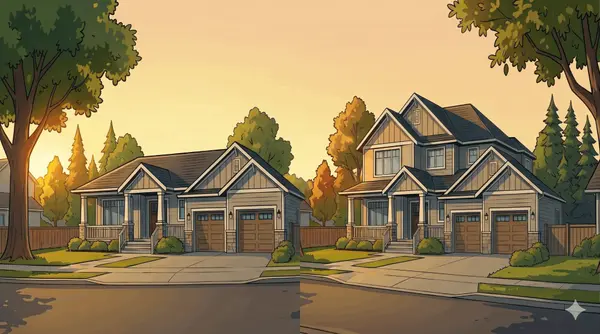
Leaving the halogen glow of the Prince George municipal core for the starlit quiet of the urban fringe is a visceral experience. As the pavement narrows and the streetlights vanish, the relationship between a resident and their environment undergoes a profound transformation. This transition to the Regional District of Fraser-Fort George (RDFFG) is often framed as an escape to independence, but it is actually a sophisticated shift in responsibility. In the rural fringe, the systems that sustain your daily life (fire protection, water quality, and road access) are no longer invisible municipal guarantees: they are personal management projects.
The 8-Kilometer "Magic Circle" for Fire Safety
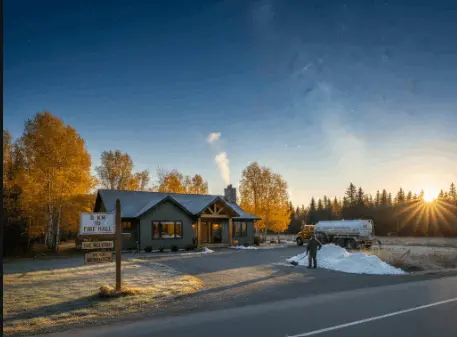
For those moving to the rural landscape, the distance between your driveway and the nearest fire hall is the single most important number for your household budget. In areas lacking municipal hydrants, the RDFFG utilizes the Superior Tanker Shuttle Service (STSS) accreditation. This system allows a fleet of mobile tankers to be recognized as the functional equivalent of a hydrant system by delivering a continuous flow of water (specifically 200 Imperial Gallons Per Minute for two hours) to a fire site.
This technical accreditation creates a "magic circle" of property value. For a residence to be rated as "protected," it must be within 8 kilometers road-distance of an accredited station and within 5 kilometers of an approved water supply point. This classification is a binary "make or break" factor: an "unprotected" rating can lead to insurance premiums so exorbitant they may derail a buyer's debt-service ratios or result in outright coverage denials. Furthermore, residents should note a major governance shift: starting in 2026, the RDFFG will take direct control of 9-1-1 dispatch from Vancouver E-Comm, bringing emergency coordination back to local hands.
"If a property falls outside these 8km/5km thresholds, it is typically rated as 'unprotected,' leading to significantly higher insurance premiums."
The Invisible Risk: Arsenic in the Aquifer
The independence of a private well comes with the burden of chemical vigilance. In the Prince George region, the bedrock contains naturally occurring arsenic, a tasteless and odorless carcinogen. Because arsenic deposits are highly localized, a neighbor’s clean test results offer no guarantee for your own well. This is an invisible risk that requires a professional "multi-barrier approach" advocated by Northern Health: protecting the source, constant monitoring, and robust treatment.
Recent shifts in health guidelines have raised the stakes, with proposed federal standards tightening from 10 parts per billion (ppb) to a more stringent 5 ppb. Consequently, a comprehensive chemical analysis is a non-negotiable condition for any rural sale. Modern lifestyle solutions (such as Reverse Osmosis systems for arsenic reduction or Ultra-Violet treatment for bacteriological safety) are now standard requirements for those seeking peace of mind in the bush.
Snow Belt Realities: The "Priority 3" Wait
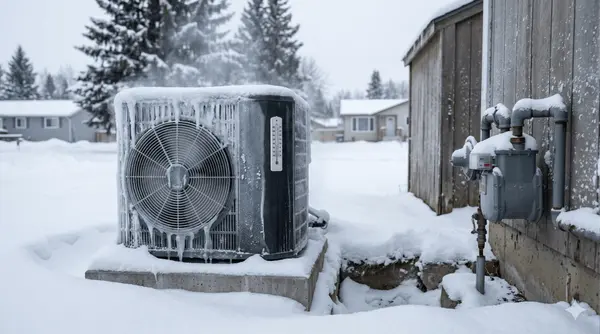
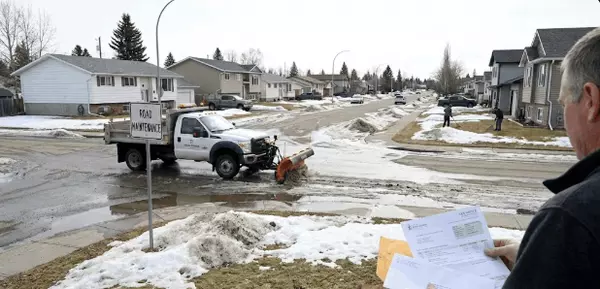
Prince George is a recognized snow belt, and in the rural fringe, winter is managed by a strict hierarchy of needs. Provincial contractors like Yellowhead Road and Bridge prioritize high-volume corridors and hospital access. Rural residential roads, classified as Priority 3, may not see a plow until 72 hours after a major storm has subsided.
A significant point of "lifestyle friction" occurs at the jurisdictional borders where Ministry of Transportation (MoTI) highways meet city roads. While the City of Prince George proactively clears snow "berms" (the ridges left at the end of driveways) in urban curb-and-gutter areas, this service vanishes in the rural setting. Residents are entirely responsible for clearing their own driveway openings. This jurisdictional clash often leaves pedestrians and secondary road drivers stranded as highway plows prioritize speed over residential access.
The 500-Square-Meter Ceiling
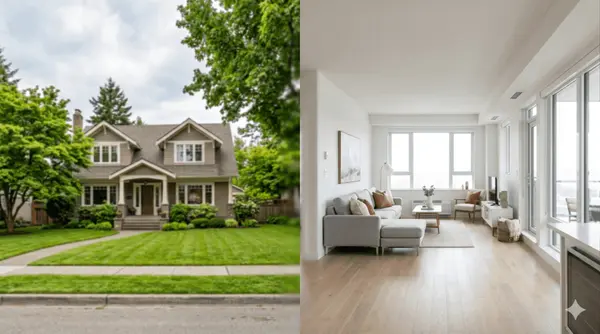
Ambitious builders often seek rural land under the assumption that "rural" means "unregulated." However, properties within the provincial Agricultural Land Reserve (ALR) are subject to some of the most restrictive footprint regulations in British Columbia. Primary residences are capped at a total floor area of 500 square meters. This regulation is a deliberate tool to prevent "rural sprawl" and preserve the region's agricultural capacity.
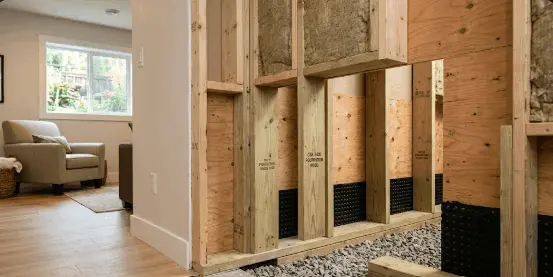
This cap frequently catches builders by surprise during the design phase. While basements can escape this count (if they are at least 50 percent below grade), any expansion beyond the 500-square-meter limit requires a lengthy and uncertain Non-Adhering Residential Use (NARU) permit from the Agricultural Land Commission. In the ALR, your "dream home" must fit within a very specific provincial box.
The Digital Revolution in the Bush
The narrative of the "disconnected" rural resident is becoming obsolete. High-density pockets like Beaverly now enjoy Fiber-to-the-home with speeds up to 5 Gbps, a level of connectivity that rivals or exceeds many urban neighborhoods. This has transformed the RDFFG from a remote outpost into a viable hub for professional remote work.
In more isolated corridors where topography limits wireless towers, Starlink has filled the gap. These satellite systems are uniquely "weather-resilient" for the North: the hardware is designed to melt snow to maintain a clear signal during the heavy storms typical of the region. High-speed internet is no longer a luxury of the city core: it is now a standard feature of the rural lifestyle.
The Tax Advantage vs. The "Opt-In" Model
The primary financial draw of the rural fringe is the dramatic reduction in property taxes. For a property valued at $450,000, a City of Prince George resident pays approximately $3,012. In contrast, an Electoral Area resident might pay between $425 and $460 for the regional portion. However, this is not a discount so much as a decentralized "pay-as-you-go" system.
In the RDFFG, specific amenities (like street lighting, community water systems, or recreation centers) are only provided if a specific community has "opted in" to pay for them. Take Electoral Area G as an example: Bear Lake residents have their own ambulance station and water system because they have chosen to fund those local service items. If you move to a neighborhood that has not opted in, you must provide those utilities yourself or live without them.
Conclusion: The Informed Ruralist
Living on the Prince George urban fringe is an empowering move toward autonomy, but it requires the technical mindset of a systems manager. Success in the rural region is built on an understanding of the 8-kilometer safety circle, the chemistry of the local aquifer, and the regulatory boundaries of the agricultural land. You are trading municipal convenience for the right to manage your own world. As you prepare for your shift to the fringe, ask yourself a final question: Are you ready to be your own utility manager, fire warden, and snow-plow coordinator?
Categories
Recent Posts