Can You Still Buy a Home in Prince George in 2026 Without Becoming House Poor?

Can You Still Buy a Home in Prince George in 2026 Without Becoming House Poor?
Yes, you can still buy a home in Prince George in 2026 without becoming house poor, but only if you buy to your real monthly budget, not to your maximum pre-approval. With a single-family benchmark of $453,600 and a 4.39 percent rate, the gap between what a lender allows and what feels comfortable is where most buyers get caught.

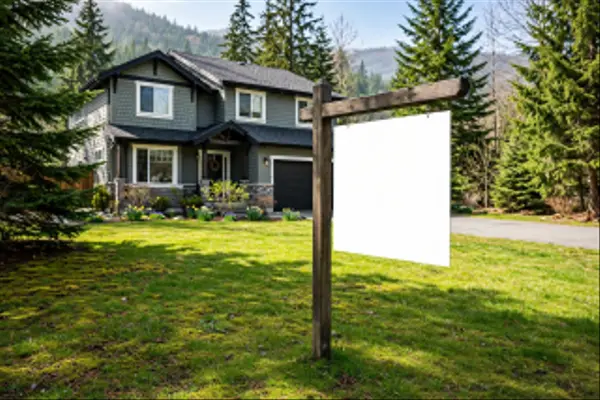
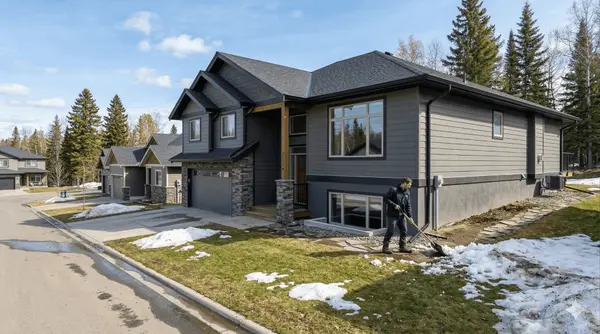
Illustrative image, not an exact replica.
A pre-approval is a useful tool, and it is also a trap. It tells you the most a lender will lend you, on the lender's terms, at the lender's stress-test rate. It does not ask about your groceries, your car payment, your savings goal, or how you want to live on a Tuesday night in February. That is the whole point of this post: the pre-approval number is the ceiling, not the target, and in Prince George in late 2026 the ceiling sits well above the comfortable number for most households.
My stance is simple, and it is the same one I gave in the costs guide: budget properly, know every cost before you offer, and buy the home you can live in comfortably, not the biggest home the bank will fund. Prince George gives you a real advantage here, because prices are far below the BC average, but the advantage disappears if you spend it all on the purchase price and leave nothing for the rest of your life.
What does house poor actually mean?
House poor means your housing costs eat so much of your income that life gets tight, even though you are making your payments. CMHC calls housing affordable when it costs less than 30 percent of before-tax income, while lenders allow housing costs up to 39 percent, so a home can pass the bank test and still leave you stretched.
The two numbers matter because they measure different things. The 30 percent line is a comfort line. The 39 percent line is a lender limit, the Gross Debt Service ratio, or GDS, for insured mortgages. GDS counts your mortgage payment at the stress-test rate, plus property tax, heating, and half of any condo fees, divided by your gross monthly income. The Total Debt Service ratio, or TDS, adds your other debts, car loans, student loans, and credit card minimums, and caps at 44 percent. Source: Mortgage Affordability Calculator, affordability rules of thumb, checked against CMHC.
Here is what that gap looks like in real life. On a $100,000 household income, 30 percent is $2,500 a month for all housing costs. The lender maximum at 39 percent is $3,250 a month. That $750 a month difference is groceries, savings, a car repair, and a trip to see family. Spend it on the house and you will feel it every single month, even if the bank was happy to lend it to you.
What is a pre-approval, and what is it not?
A pre-approval is a lender's conditional estimate of how much you could borrow, based on your income, debts, credit, and down payment, tested at the stress-test rate. It is not a promise to lend, it is not a budget, and it is not advice on what you should spend, because it never sees your full cost of living.
A pre-approval usually lasts 60 to 120 days, depending on the lender, and it can hold a rate while you shop. That rate hold is genuinely useful in a market where rates are moving. What the pre-approval does not do is check whether the payment leaves room for property tax, insurance, heating, maintenance, and the life you actually live. It also does not guarantee the home will appraise at your offer price, and it does not survive a job change, a new car loan, or a missed payment between pre-approval and closing.
Treat it the way you would treat a speed limit. It tells you the fastest you are allowed to go, not the speed you should drive in winter. In Prince George, with snow on the ground for months of the year, that distinction is not abstract. It is the difference between a comfortable winter and a stressful one.
How does the mortgage stress test change what you can borrow?
The stress test qualifies you at the greater of your contract rate plus 2 percentage points, or a 5.25 percent floor, under OSFI Guideline B-20 for regulated lenders. At the lowest tracked 5-year fixed rate of 4.39 percent, you must qualify at 6.39 percent, which cuts your borrowing power by a fifth compared with qualifying at your real rate.
OSFI confirmed in January 2026 that the rule is unchanged: the floor stays at 5.25 percent and the buffer stays at 2 points, reviewed at least once a year. The rule applies to insured and uninsured mortgages at federally regulated lenders, and the same formula is used for insured mortgages under the federal rules. One real exception exists: since November 21, 2024, an uninsured borrower making a straight switch to a new federally regulated lender at renewal, with no increase in loan amount or amortization, does not have to re-pass the stress test. That helps renewers, not buyers. Source: Loans Canada, The Canadian Mortgage Stress Test in 2026, citing OSFI.
The stress test is not the enemy. It is the reason a rate rise does not immediately break your budget. But it also means your pre-approval is built on a payment you will never actually make, at 6.39 percent, while your real payment is built at 4.39 percent. That gap hides the real question, which is what you can afford at your actual rate, after every other cost is paid.
What does a Prince George home actually cost per month in November 2026?
On the October 2026 single-family benchmark of $453,600, with 20 percent down, the mortgage is $362,880, or about $1,986 a month at 4.39 percent over 25 years. Add property tax of about $367 a month, insurance, maintenance, and heating, and the all-in cost is about $3,027 a month, or about 36 percent of a $100,000 household income.
Start with the market, because Prince George is the good news in this story. The BC Northern Real Estate Board reported a composite MLS Home Price Index benchmark of $435,100 in October 2026, down 0.3 percent from a year earlier. The single-family benchmark was $453,600, down 0.4 percent, townhouses were $303,000, up 6.9 percent, and apartments were $226,000, down 8.6 percent. The average price of homes sold in October was $424,053, and 355 homes sold in the board area. Those board figures cover a huge region, not Prince George alone, so treat them as the regional picture. Source: CREA Statistics, BC Northern Real Estate Board, October 2026 and BCREA, October 2026 statistics.
Inside the city, the picture is steadier. To the end of September 2026, 1,043 properties worth $531.4 million had changed hands in Prince George. Median detached prices ran from $400,000 east of the bypass to $474,500 in the west, and $590,000 in both the north and the southwest, with 838 properties listed for sale in the city at the end of September. Source: BC Northern Real Estate Board, third quarter 2026 news release.
Now the rates. The Bank of Canada raised its overnight rate to 2.50 percent on October 28, 2026, its first increase since July 2023, and the big banks moved prime to 4.70 percent the next day. The next decision is December 9. Fixed rates follow bond yields, not prime: the lowest tracked 5-year fixed is 4.39 percent as of November 16, 2026, while big-bank 5-year fixed rates run from 4.84 to 5.19 percent, and the 5-year Government of Canada bond yield was 3.59 percent on November 13. Source: Bank of Canada, October 28, 2026 decision and Ratellow, 5-year fixed rates, November 16, 2026.
The table below runs the same home at three rates, so you can see the stress test in dollars. All payments are illustrative, calculated on a 25-year amortization with Canadian semi-annual compounding, before insurance, tax, and maintenance. Property tax uses the 2026 Prince George rate of 9.7125 per $1,000 of assessed value, which is about $367 a month on a $453,600 home.
| Home price, 20 percent down | Mortgage | Payment at 4.39 percent | Payment at 6.39 percent (stress test) | Payment at 4.84 percent (big-bank low end) |
|---|---|---|---|---|
| $424,053 (October average sold) | $339,242 | $1,865 | $2,267 | $1,952 |
| $453,600 (single-family benchmark) | $362,880 | $1,986 | $2,407 | $2,078 |
| $500,000 | $400,000 | $2,189 | $2,653 | $2,290 |
| $500,000, 10 percent down | $450,000 | $2,463 | $2,984 | $2,576 |
Read the middle row carefully. At your real rate the mortgage is $1,986 a month, but the lender qualified you at $2,407 a month. That $421 a month gap is the stress test doing its job. The trap is not the test. The trap is treating the pre-approval built on the $2,407 payment as permission to spend up to the limit, then discovering that tax, insurance, maintenance, and heating push the all-in cost to about $3,027 a month on that same home, using about $367 for tax, about $146 for insurance, about $378 for a 1 percent maintenance reserve, and a $150 heating allowance as a planning figure. On a $100,000 income that is about 36 percent of gross pay, above the 30 percent comfort line and just under the 39 percent lender limit.
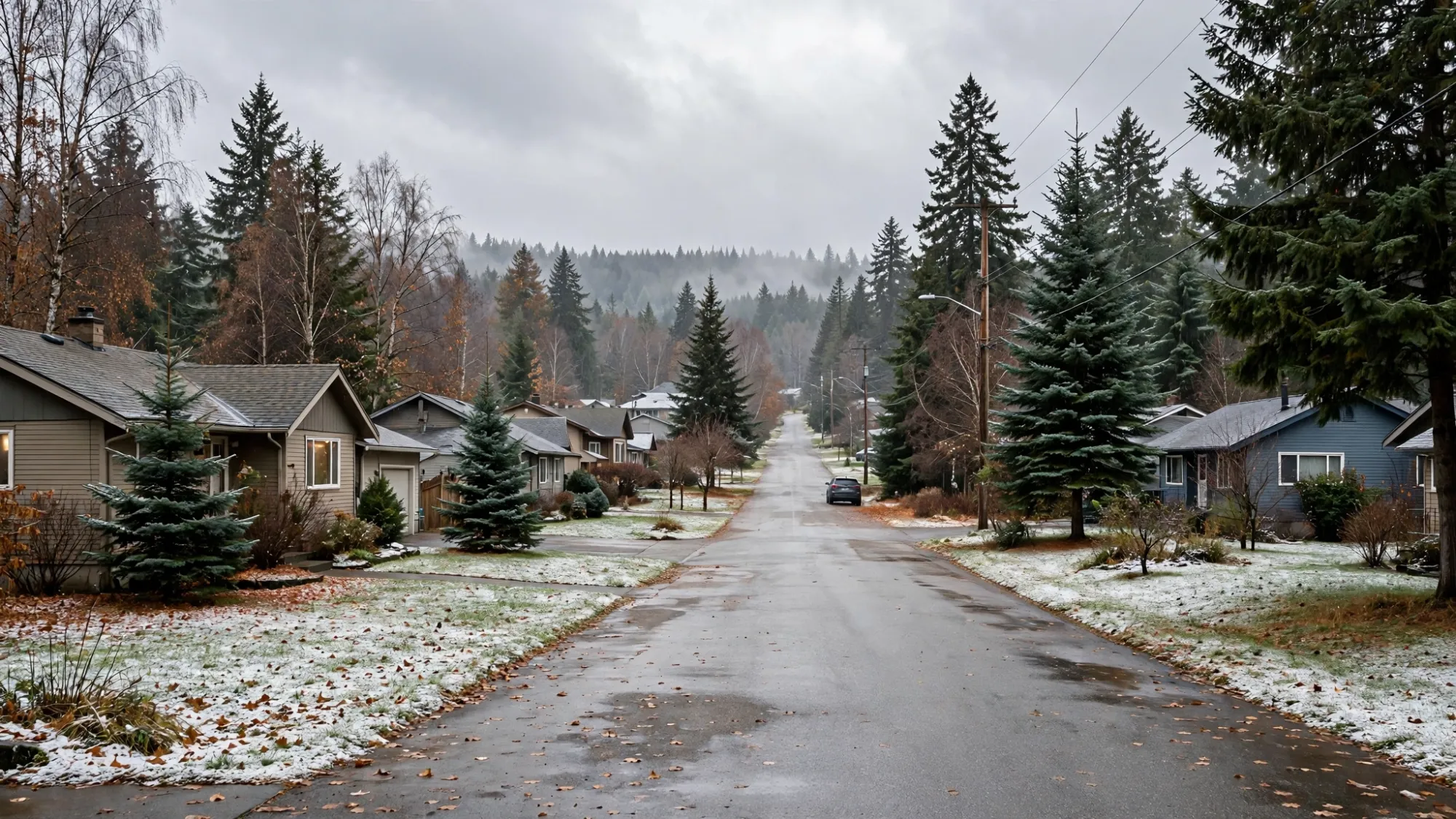
Illustrative image, not an exact replica.
Why is Prince George cheaper than the rest of BC, and does that help?
Yes, it helps a lot, and it is the reason this question has a hopeful answer here. The BC average home price was $949,832 in October 2026, more than double the BC Northern average of $424,053, so the same income buys far more house in Prince George, and a smaller mortgage leaves more room for everything after the payment.
CREA's October forecast put the national average price at $681,681 for 2026, up just 0.2 percent, with BC forecast down 0.8 percent to $944,685, and national sales forecast at 444,530, down 5.2 percent from 2025. Prince George is not following the big-city story. Prices here are roughly flat year over year, sales are steady, and buyers have choice, with 838 listings in the city at the end of September, up from 713 a year earlier. Source: Canadian Mortgage Professional, CREA October 2026 forecast.
That price gap is your margin of safety, but only if you keep it. A $453,600 home in Prince George and a $950,000 home in the Lower Mainland are not the same decision, even with the same income. The Prince George buyer can hold the mortgage near $2,000 a month and still have room for life. The same buyer at the higher price cannot, no matter how good the rate is. Buy the Prince George advantage, do not spend it.
What costs do pre-approvals leave out?
Pre-approvals leave out almost everything except the mortgage, the tax, and the heat the lender counts. They do not count home insurance, maintenance, water, sewer, garbage, moving, furniture, or the first repair, and in Prince George those add about $950 to $1,350 a month beyond the mortgage on a $500,000 home.
The full list is in the companion guide, What Are the True Costs of Homeownership in Prince George Beyond the Mortgage?, and the short version is this: property tax is about $405 a month on a $500,000 home before the home owner grant, insurance runs about $1,450 to $1,900 a year in Prince George, and a 1 to 2 percent maintenance reserve is $417 to $833 a month. Heating, water, sewer, and garbage sit on top. None of that appears in the pre-approval letter. Source for insurance: Western Financial Group, BC Home Insurance 2026.
Closing costs are the other blind spot. In BC, property transfer tax is 1 percent on the first $200,000 and 2 percent up to $2,000,000, but qualifying first-time buyers pay no tax on the first $500,000 of a home worth $835,000 or less, a saving of up to $8,000, with a partial exemption up to $860,000. On a $500,000 first home, that can mean no property transfer tax at all, which is real money back in your budget. Legal fees, appraisal, inspection, and moving still come out of your cash, so keep them in the plan. Source: Raincity Properties, BC Property Transfer Tax 2026, citing the Government of British Columbia.
Minimum down payments follow the federal rule: 5 percent on the first $500,000, 10 percent on the portion from $500,000 to $1,500,000, and 20 percent above that, with mortgage insurance required below 20 percent down. On a $500,000 home, 5 percent down is $25,000, but the smaller down payment means a bigger mortgage, a higher payment, and an insurance premium added to the loan. A bigger down payment is not just a smaller loan. It is a smaller monthly life. Source: Canadian Money Guide, How Much House Can You Afford, 2026.

Illustrative image, not an exact replica.
How do you buy without becoming house poor?
Work backwards from the monthly payment you can live with, then find the price that fits it, instead of working forwards from your maximum pre-approval. Start with the 30 percent comfort line, add every real cost, test the total at a higher rate, and only then go shopping, with a pre-approval that matches your budget, not your limit.
- Set your comfort number first. Take your gross monthly income, multiply by 30 percent, and treat that as your all-in housing budget, mortgage plus tax, insurance, heating, and maintenance. If that number is $2,500, shop for a home whose all-in cost fits $2,500, not a home whose mortgage alone is $2,500.
- Run the real payment, not the advertised one. Price the home at your actual contract rate, then re-run it at the stress-test rate of contract plus 2 points. If the higher payment would break you, the home is too much, even if the bank approved it.
- Get quotes before you offer. An insurance quote, the last 12 months of utility bills, and a home inspection turn guesses into numbers. A home with a newer furnace and roof can cost less to own than a cheaper home that needs both.
- Keep a buffer after closing. Do not spend your last dollar on the down payment. Keep three to six months of all-in housing costs aside, and fund a maintenance account monthly, so the first repair is a planned cost, not a crisis.
- Consider the smaller home, or the different neighbourhood. In Prince George, the median detached price east of the bypass was $400,000 to September 2026, against $590,000 in the north and southwest. The same budget buys a very different monthly life depending on where you look.
- Ask your lender for a pre-approval at your number. You can ask for less than your maximum. A pre-approval for the amount you actually plan to spend keeps you honest when a bidding moment tempts you to stretch.
If you are a first-time buyer, the BC first-time buyer property transfer tax exemption and the federal first-time buyer programs can help with cash to close, but they do not change the monthly math. Use them to protect your buffer, not to justify a bigger price. And if you are buying with less than 20 percent down, remember the insurance premium is added to your mortgage, so your payment is higher than the headline price suggests. Run the numbers with the premium included, not without it.
So, can you still buy in Prince George in 2026?
Yes, and Prince George is one of the few BC cities where the answer is still yes for ordinary incomes. A $453,600 benchmark home, a 4.39 percent rate, and a flat local market mean a careful buyer can own comfortably, provided the purchase is sized to the real monthly budget and not to the maximum the lender will allow.
The market is not going to save you from a bad budget, and it is not going to punish a good one. Prices are flat, rates are off their peak, and choice is better than it was a year ago. That is a good market to buy carefully in. It is a bad market to buy carelessly in, because the costs after the mortgage do not care what the bank approved.
If you want the step-by-step version, start with the Home Buyer Guide. It walks through pre-approval, the real monthly budget, and the timeline from offer to possession, so you know every cost before you commit. Then, if you want a second set of eyes on your numbers or a specific home, text me. I would rather help you buy right than help you buy stressed.
Talk to a Prince George REALTOR®
Get the Home Buyer Guide and select your program. Evan McLeish and Marc Posselt are Prince George REALTORS® with EMP Collective, eXp Realty. livinginprincegeorge.com/ultimate-home-buyers-guide
Questions about your numbers or a specific home? Text Evan at 778-910-9655
Text Marc at 250-251-5800
Read the full article on our blog: livinginprincegeorge.com/blog | Subscribe: Living in Prince George on YouTube | More videos: bit.ly/LivingInPG
Follow EMP Collective on Facebook and Instagram to see what living in Prince George actually looks like.
Evan McLeish and Marc Posselt are REALTORS® with EMP Collective, eXp Realty, in Prince George, BC. This article is general information, not mortgage or financial advice. Rates, prices, and rules change, so confirm your rate, your pre-approval, and your closing costs with your lender and your lawyer or notary before you offer. Market figures are from the BC Northern Real Estate Board, CREA, BCREA, the Bank of Canada, and OSFI, as cited above, and payment examples are illustrative calculations at the stated rates.
Categories
Recent Posts