What Makes a Good Investment Property in Prince George Right Now?

What Makes a Good Investment Property in Prince George Right Now?
A good investment property in Prince George right now is one where the rent covers the carrying costs at today's rates, the home is in a neighbourhood tenants actually want, and the price leaves room for the real expenses. With the benchmark price at $435,100 and the average purpose-built rent at $1,354 a month, the math only works when you buy the right property type, not just any cheap house.
Prince George is a real investor market, not a speculation market. It is a regional hub of 76,708 people, 89,490 across the census agglomeration, according to the 2021 Census, with a hospital, a university, mills, mines and a college feeding steady rental demand. Prices are low enough that an ordinary investor can buy in, but rents are not high enough to forgive a bad purchase. That combination rewards the investor who runs the numbers first and buys on yield, not on hope.
I am Evan McLeish, a Prince George REALTOR with EMP Collective, eXp Realty, and I have bought, renovated and rented homes in this city myself. This post uses the latest published numbers from CMHC, the BC Northern Real Estate Board, the Bank of Canada and the Province of BC, so you can check the math yourself before you buy.
What do the Prince George rental numbers actually say?
CMHC's October 2025 survey, the latest published as of November 18, 2026, put the average purpose-built rent in Prince George at $1,354 a month, up 11.0 percent from a year earlier, with vacancy at 4.3 percent, up from 2.6 percent. Rents are rising fast, but vacancy is rising too, so landlords now compete harder for tenants than they did a year ago.
That pair of numbers is the whole story in one line. Rent growth of 11.0 percent is strong, and it reflects a market where the average rent was $1,186 a year earlier and the median rent is now $1,350. But vacancy moving from 2.6 percent to 4.3 percent means more empty units, longer leasing times and less room to push rents on turnover. A good investment property is one that still works with a 4.3 percent vacancy rate, not one that only works if every unit is full all year.
The vacancy picture also changes by unit size. Here is what CMHC reported for October 2025:
| Measure (CMHC, October 2025 survey) | Prince George | Change from October 2024 |
|---|---|---|
| Average rent, purpose-built apartments | $1,354 per month | Up 11.0% (same-sample basis) |
| Median rent, purpose-built apartments | $1,350 per month | Up from $1,131 |
| Vacancy rate, all purpose-built units | 4.3% | Up from 2.6% |
| Vacancy, one-bedroom units | 5.3% | Highest of the bedroom types |
| Vacancy, two-bedroom units | 3.7% | Tightest of the bedroom types |
| Vacancy, three-bedroom and larger | 4.3% | Matches the overall rate |
| Purpose-built units surveyed | 3,846 | Up from 3,759 |
Two details matter for an investor. First, two-bedroom units have the tightest vacancy at 3.7 percent, while one-bedrooms sit at 5.3 percent, so a two-bedroom layout leases more reliably. Second, these are purpose-built apartment figures. A detached house in Prince George typically rents for more than $1,354 a month, which is exactly why the property type matters so much, and why the worked example below uses the apartment average as a floor, not as the rent for a house.
One timing note: CMHC surveys in October and publishes the Rental Market Report in December. The October 2026 survey results are expected in December 2026, so the figures above are the latest published numbers as of today, November 18, 2026. When the new edition lands, check whether vacancy kept climbing or levelled off, because that is the number that decides how aggressive you can be on rent.
How do you run the numbers before you buy?
Start with gross yield, which is annual rent divided by purchase price, then subtract vacancy, taxes, insurance, maintenance and management before you believe any return. At the October 2026 benchmark price of $435,100, the CMHC average apartment rent of $1,354 a month gives a gross yield of 3.7 percent, which is a warning, not a green light, unless the property earns more than the apartment average.
Here is the arithmetic, using only the verified figures above, so you can see why the property type decides the deal:
| Monthly rent on a $435,100 purchase | Annual rent | Gross yield | What it means |
|---|---|---|---|
| $1,354 (CMHC average apartment rent) | $16,248 | 3.7% | Thin. Costs eat most of this before mortgage payments. |
| $1,450 | $17,400 | 4.0% | Still tight at today's rates. |
| $1,813 | $21,756 | 5.0% | Workable, if expenses are controlled. |
| $2,176 | $26,112 | 6.0% | Strong for Prince George, usually needs a suite or two units. |
The old 1 percent rule, which says monthly rent should be 1 percent of the purchase price, would demand $4,351 a month on a $435,100 home. That rule does not work in Prince George, and it has not worked here for years. Do not use it to screen deals, or you will reject every property in the city. Use gross yield instead, and treat 5 percent as the line where a deal starts to deserve a closer look.
Then stress test it. A 4.3 percent vacancy rate means budgeting for roughly two weeks empty in a typical year, plus turnover costs between tenants. Rates matter too: the Bank of Canada raised the overnight rate to 2.50 percent on October 28, 2026, its first increase since July 2023, and prime moved to 4.70 percent. The next decision is December 9, 2026, and the Bank has said further increases could be needed. Run your numbers at a rate higher than today's, because a deal that only works at the lowest possible rate is not a deal, it is a bet.
Do not forget the closing costs. BC property transfer tax is 1 percent on the first $200,000 and 2 percent on the portion from $200,000 to $2,000,000, so on a $435,100 purchase the tax is $6,702. The first-time buyer exemption, up to $8,000 for homes valued at $835,000 or less, does not apply to an investment property, because it requires the home to be your principal residence. Budget the full $6,702, plus legal fees and an inspection, before you count your cash to close.
Which property types work best in Prince George?
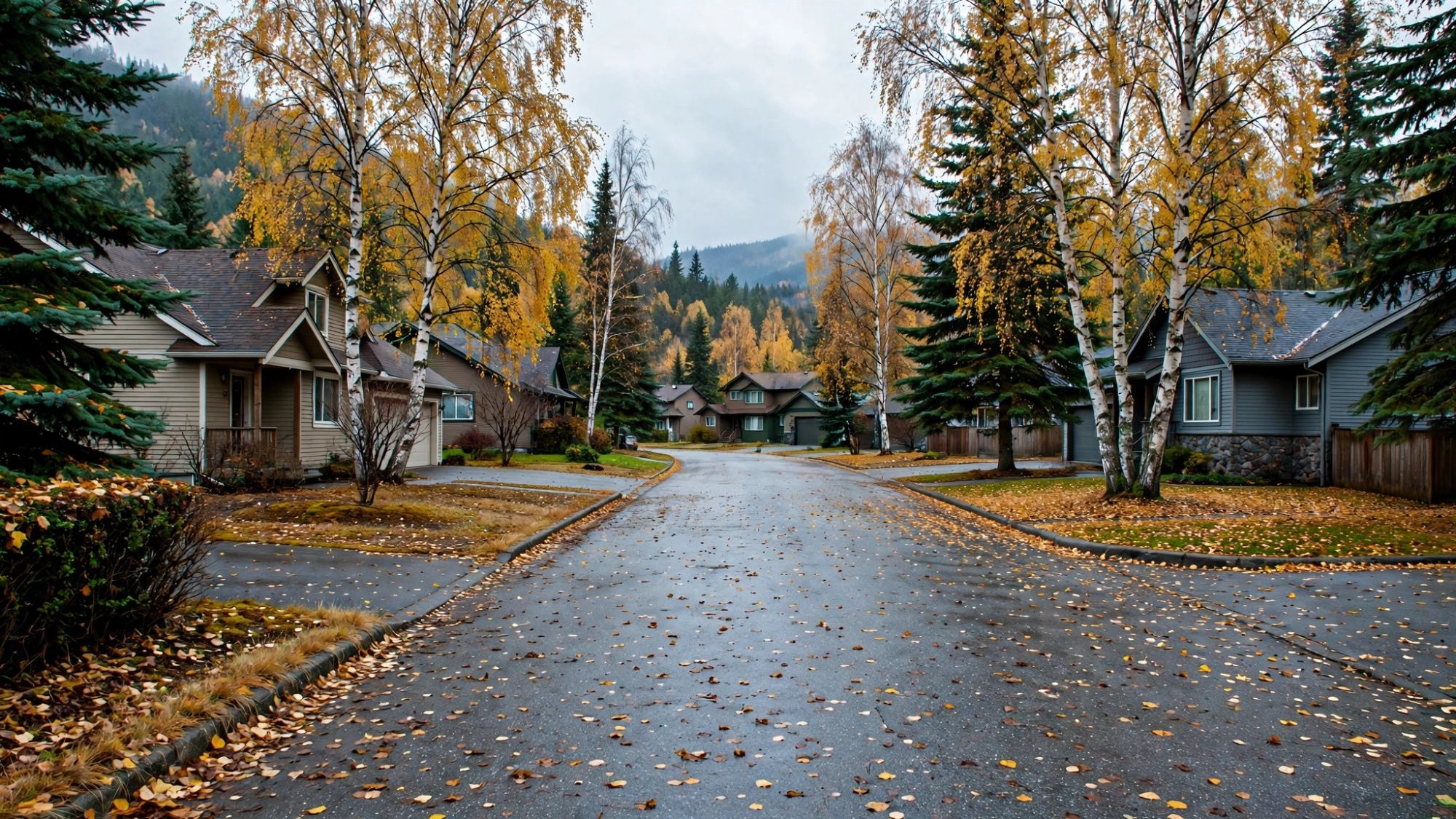
The property types that work best in Prince George are detached homes with a legal secondary suite, duplexes, and well-located two-bedroom units, because they are the formats that can actually reach the rents the math needs. A single detached home rented to one household at the apartment average rent does not cash flow at the benchmark price, while the same house with a suite does.
 Here is how the main formats compare in this market:
- Detached home with a suite. The classic Prince George investor play. Two rents from one roof, and the suite rent is what pushes gross yield from 3.7 percent toward 5 percent or better. Before you count the suite income, confirm with the City of Prince George that the suite is legal and conforming, because an illegal suite is a liability, not an asset.
- Duplex or multi-unit. Two doors, two rents, one roof and one lot. These are scarcer in Prince George than single-family homes, and they tend to sell at a premium per door, but they are the most straightforward way to reach a 6 percent gross yield.
- Two-bedroom condo or apartment. Two-bedroom units had the tightest vacancy in the CMHC survey at 3.7 percent, against 5.3 percent for one-bedrooms. Lower purchase price, lower maintenance, but strata fees and special levies can erase the advantage, so read the strata documents before you offer.
- Single detached home, one household. The simplest to own and the hardest to make cash flow at current prices. It works as a long-term hold where appreciation and mortgage paydown do the work, not as a cash flow play, unless the rent is well above the apartment average.
Neighbourhood matters as much as format. Tenants in Prince George rent for the same reasons buyers buy: close to the hospital, the university, the college, the mills and the schools, with a reasonable commute and a safe-feeling street. A home near those anchors leases faster and holds its rent better when vacancy rises. A cheaper home on the edge of town with no anchor nearby is cheap for a reason, and the vacancy rate will remind you of that reason every time it sits empty.
What does BC law change about being a landlord here?
Three BC rules shape every investment decision in Prince George: rent increases on an existing tenancy are capped at 2.3 percent for 2026 and 2.2 percent for 2027, the cap does not apply when a tenancy ends and a new one starts, and Prince George is not in the speculation and vacancy tax regions, so that tax does not apply here at all.
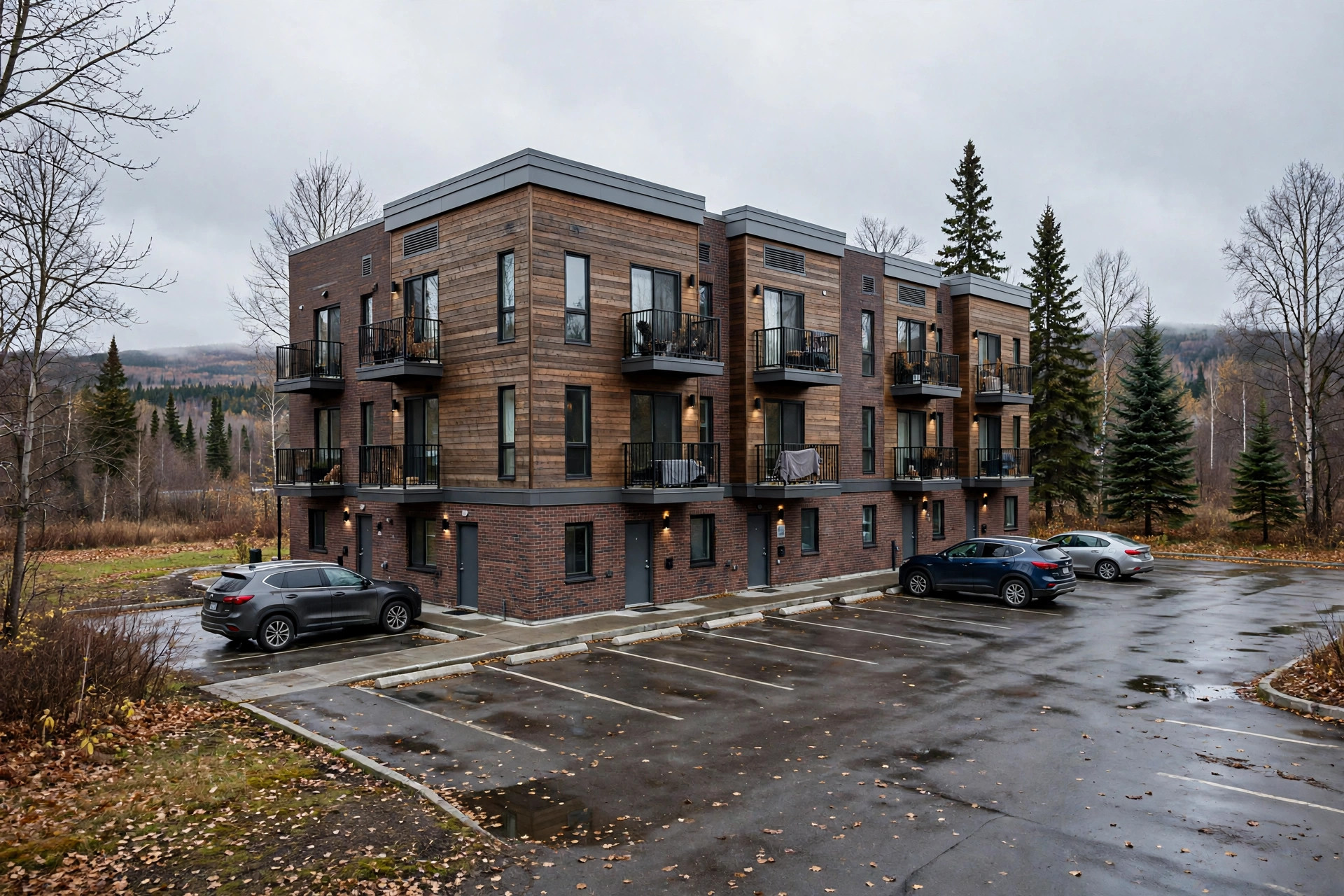 The rent cap is the one investors misunderstand most. Under the Residential Tenancy Act, a landlord can raise rent on an existing tenancy by no more than the annual limit, 2.3 percent for increases taking effect in 2026 and 2.2 percent for 2027, with at least three full months of written notice on Form RTB-7, and only once every 12 months. That means you cannot buy a property with a below-market tenant and fix the rent next month. Your underwriting has to work at the rent you inherit, not the rent you wish for.
The other side of the same rule is that the cap does not apply between tenancies. When a tenant moves out, the next tenancy starts at market rent. That is why turnover matters so much in the numbers: a long, stable tenancy at a capped rent is predictable income, while a vacancy is your chance to reset to market, minus the cost of the empty weeks.
On taxes, Prince George has a real advantage over the Lower Mainland and the Okanagan. BC's speculation and vacancy tax applies only in designated regions, which include Metro Vancouver, the Capital Regional District, Kelowna, Nanaimo, Kamloops, Abbotsford, Chilliwack, Mission and several other southern communities. Prince George is not on that list, so the tax does not apply to property here. That is one less annual filing and one less cost in your model, and it is a genuine reason Prince George attracts investors who are priced out of the taxed regions.
None of this is legal or tax advice. Talk to your lawyer and your accountant before you buy, especially on the rent cap, suite legality and how rental income is taxed for your situation. The rules are public and the numbers are checkable, and a good professional will confirm them against your specific deal.
What are the risks investors get wrong in Prince George?
The risks investors get wrong in Prince George are vacancy, winter maintenance, and underwriting to the best case. A 4.3 percent vacancy rate, a northern winter, and a Bank of Canada that just raised rates all punish the same mistake: assuming everything goes right, every month, for the whole hold.
- Vacancy is rising, not falling. Vacancy went from 2.6 percent to 4.3 percent in a year. Budget for it, and budget for turnover costs, cleaning, advertising and a few weeks empty, because that is what the market is actually doing right now.
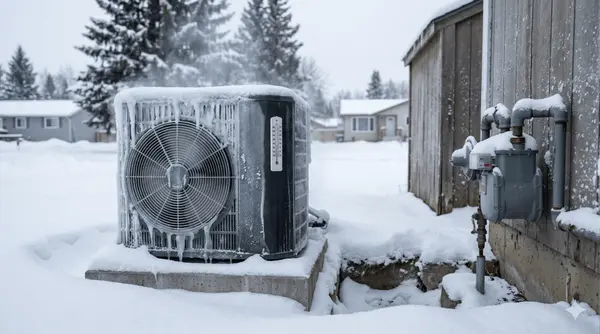
- Winter costs are real. Prince George averages 203.9 centimetres of snow a year. Roofs, furnaces, pipes and driveways all cost more to maintain here than in a mild climate. Get a furnace and roof age from the inspection, and hold a maintenance reserve instead of spending every dollar of rent.
- Rates just moved the wrong way for borrowers. The October 28 hike to 2.50 percent, with prime at 4.70 percent, means variable-rate and renewal costs went up, not down. If your deal only works at the rate from a year ago, it does not work.
- Price growth is flat, not fast. The BC Northern benchmark sat at $435,100 in October 2026, nearly flat all year, and the BCREA fourth quarter forecast expects the average price to rise only to about $465,000 in 2027 from about $456,000 in 2026. Buy for the rent, not for a quick flip, because the market is not going to bail out a bad purchase.
- Tenant quality decides the return. One bad tenancy costs more than a year of modest rent growth. Screen properly, check references, and keep the home in the condition that attracts the tenant you actually want.
The balanced market is actually the good news. At five months of inventory in October 2026, the BC Northern region is a balanced market, not a frenzy. The median days on market for a sold single detached home was 25 days in the third quarter of 2026, so well-priced homes still move, but nobody is forcing you to waive an inspection or bid over asking on a Tuesday night. You have time to run the numbers, and in this market, time is your edge.
Where do you start if you want to invest in Prince George?
Start by deciding what return you actually need, then look only at properties that can produce it, and let a local REALTOR run the real rent and expense numbers before you offer. The investors who do well in Prince George are the ones who treat the first property like a business purchase, with a budget, a reserve, and a plan for the empty months.
A practical order: first, set your target gross yield and your maximum price, using the table above. Second, pick your format, a home with a suite, a duplex, or a two-bedroom unit near the hospital, UNBC or CNC, and ignore everything else. Third, get the real numbers on any property you like, actual rents for the street, actual taxes, insurance quotes, and the age of the roof and furnace, not a listing agent's estimate. Fourth, have your lawyer confirm the suite status and your accountant confirm the tax treatment. Then offer with conditions that let you verify all of it.
If you are thinking about your first investment property, or your fifth, Marc Posselt and I work with investors in Prince George every week, and we will run the numbers straight with you. No pressure, no hype, just the real rent, the real costs, and an honest answer about whether the deal works.
Prince George Real Estate and Local Resources
Get the Home Buyer Guide and select your program: https://livinginprincegeorge.com/ultimate-home-buyers-guide
Join the Free 12-Week PG Buyer Fast-Track Program: https://livinginprincegeorge.com/fast-track-buyer-program
Read the full article on our blog: https://livinginprincegeorge.com/blog
Book a direct call with Evan: bit.ly/Book-A-Call-With-Evan | Book a direct call with Marc: bit.ly/AskMeAnythingRE
Subscribe to Living in Prince George: https://youtube.com/@LivingInPrinceGeorge
Watch more Prince George videos: https://bit.ly/LivingInPG
Follow EMP Collective on Facebook: https://www.facebook.com/EmpCollective.PG and Instagram: https://www.instagram.com/emp.collective/ to see what living in Prince George actually looks like.
Call Evan: 778-910-9655 | Call Marc: 250-251-5800
Evan McLeish and Marc Posselt are Prince George REALTORS with EMP Collective, eXp Realty.
Sources: CMHC Rental Market Statistics, Prince George, October 2025 survey (vacancy 4.3%, average rent $1,354, median rent $1,350, 3,846 units); BC Northern Real Estate Board monthly releases (benchmark $435,100, five months of inventory, October 2026); Bank of Canada, October 28, 2026 rate announcement (overnight rate 2.50%, prime 4.70%); Province of BC, Rent Increases (2.3% for 2026, 2.2% for 2027); Statistics Canada, 2021 Census (city population 76,708). Checked November 18, 2026. This article is general information, not legal, tax or financial advice.
Categories
Recent Posts