IREN's AI Data Centres in Prince George and Mackenzie: What They Mean for Home Prices
IREN's AI Data Centres in Prince George and Mackenzie: What They Mean for Home Prices
IREN, a NASDAQ-listed AI cloud company formerly called Iris Energy, is converting its Prince George and Mackenzie campuses from bitcoin mining into AI data centres, with new NVIDIA GPUs arriving in Prince George and new liquid-cooled buildings under construction in Mackenzie. For Prince George housing, that means more skilled jobs and more rental demand in a market that is balanced today, not a guaranteed price jump.
If you have driven past the industrial areas on the edge of town and wondered what those low, humming buildings are, this is the short version. A company called IREN has been running data centres in northern BC since 2022. It started with bitcoin mining. Now the same buildings, the same power, and the same fibre are being pointed at artificial intelligence, and the money involved got a lot bigger.
This is the first in a series looking at the big projects landing around Prince George, one at a time, with only facts that can be checked. If you want the big picture first, here is our own video on the projects reshaping the city.
What is IREN building in Prince George?
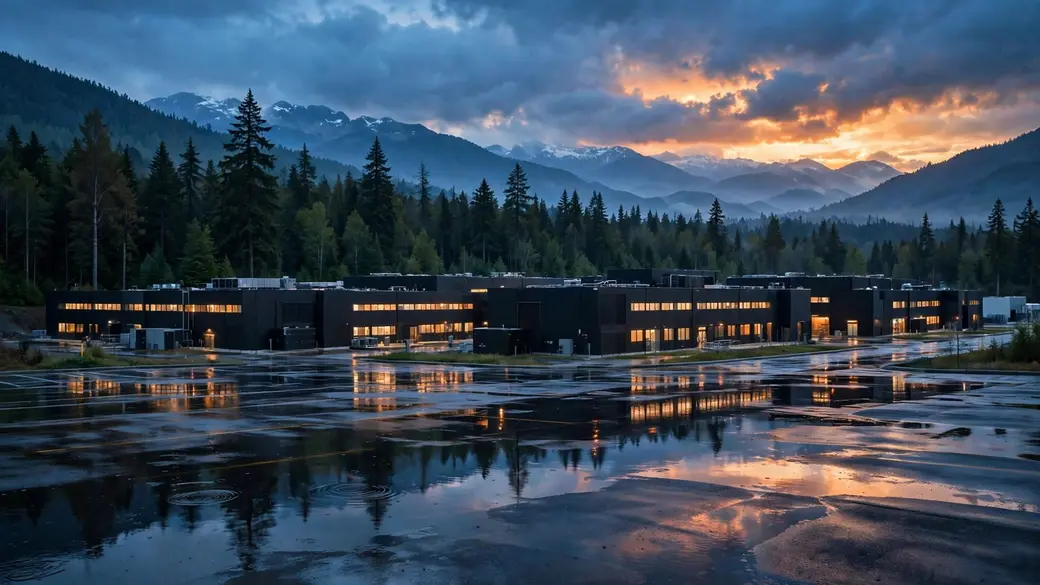
IREN runs a 50 megawatt data centre campus on a 12 acre freehold site in Prince George, operating since September 2022. It started as a bitcoin mining site and is now being converted to AI cloud, with its air-cooled GPU fleet fully commissioned and liquid-cooling installation underway, plus a new 10 megawatt liquid-cooled building under construction for NVIDIA GB300 systems.
The scale of the shift became clear on September 22, 2025, when IREN announced it had doubled its AI Cloud fleet to about 23,000 GPUs. The company bought 7,100 NVIDIA B300s, 4,200 NVIDIA B200s, and 1,100 AMD MI350X chips for about $674 million US, and said deliveries would be staged at its Prince George campus over the coming months. Its target at the time was more than $500 million US in AI Cloud annualized run-rate revenue by the end of the first quarter of 2026.
A few details from that announcement matter for Prince George:
- The Prince George campus can house more than 20,000 NVIDIA Blackwell GPUs, according to IREN, so the buildings already here have room to grow.
- The new liquid-cooled building is a 10 megawatt IT load facility built for NVIDIA GB300 NVL72 systems, with room for more than 4,500 GPUs.
- IREN says its British Columbia campuses together can support more than 60,000 Blackwell GPUs, based on 160 megawatts of power capacity across the three sites.
- An earlier order, in August 2025, added 4,200 Blackwell B200 GPUs and took the Prince George GPU total to about 8,500.
One honest note: IREN's biggest contracts are in Texas, including a large Microsoft deployment, and its company-wide contracted revenue target of more than $4 billion US is mostly about those Texas sites. Prince George is one piece of a larger platform, not the whole story, and it is worth saying that plainly.
What is happening at the Mackenzie site?
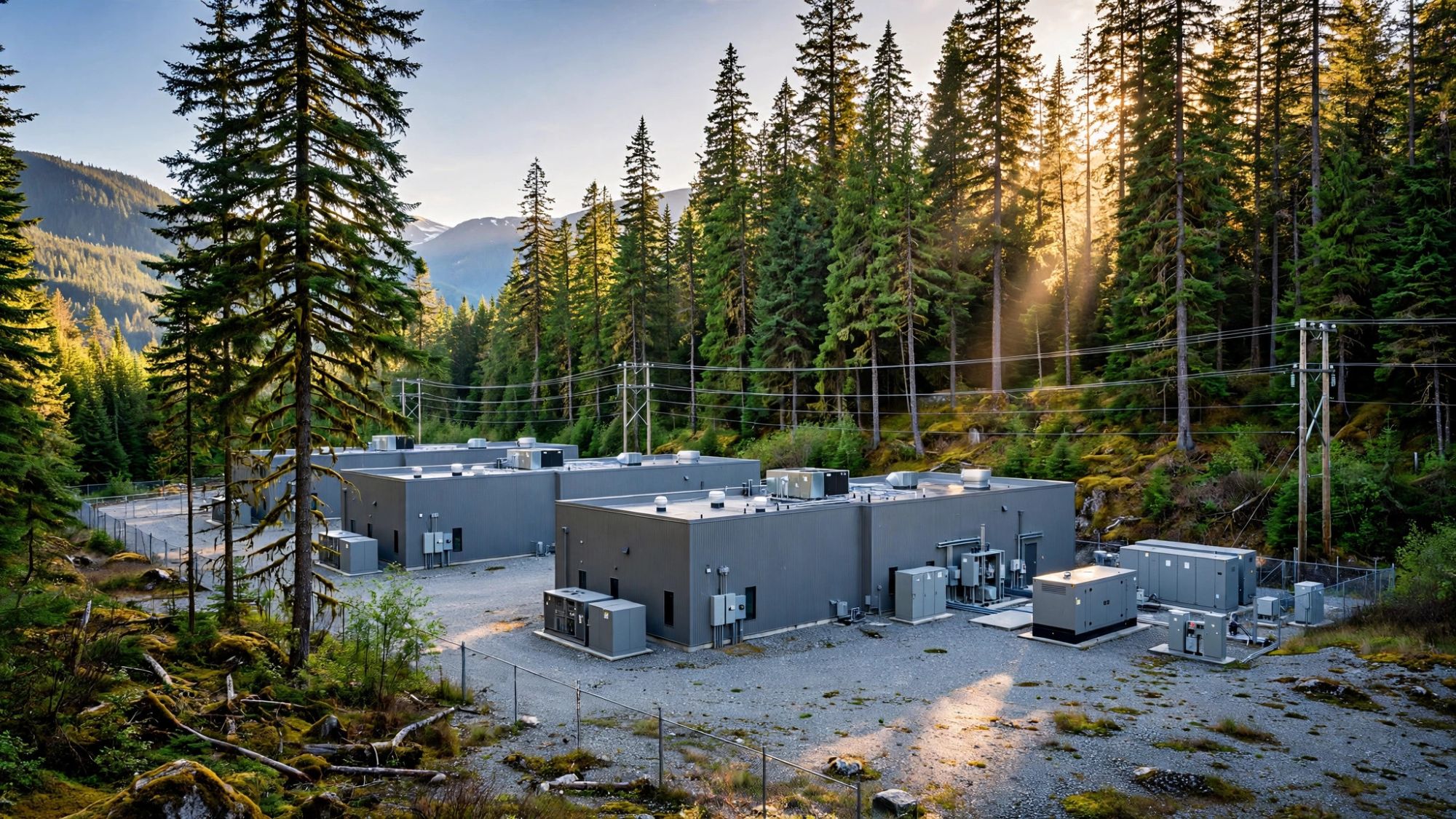
Mackenzie, about 170 kilometres north of Prince George, hosts IREN's largest BC site at 80 megawatts, operating since April 2022 on 11 acres bought from the District of Mackenzie. On November 5, 2026, IREN said new liquid-cooled data centres have started construction at the site, now described as a 100 megawatt site, with GPUs being installed through 2026.
Mackenzie is a town of about 4,000 people that was built around forestry, and it felt the mill closures hard. The data centre arrived in 2022, when the site was commissioned in two phases ahead of schedule. At the time, the company said the site would add about 15 direct full-time local jobs in its mining phase. The AI conversion is a different scale of investment.
Here is what is confirmed about Mackenzie today:
- GPUs are being installed at Mackenzie, and air-cooled retrofits are continuing alongside the new liquid-cooled construction.
- Customer prepayments and GPU financing covered more than 100 percent of the GPU cost for the Mackenzie deployments, according to IREN's November 5, 2026 results, which means customers are paying upfront for capacity that is still being built.
- IREN arranged about $2.4 billion US in equipment financing at a 9 percent fixed rate for Mackenzie, as disclosed on its August 2026 earnings call.
- Mackenzie's mayor told The Tyee the site employs about 60 people now, with at least 75 expected next year.
For Prince George, Mackenzie matters because the two sites are one workforce region. Technicians, electricians, and contractors who work on the Mackenzie build often live in Prince George, and the supply chain runs through Prince George first.
Why did an AI company pick northern BC?
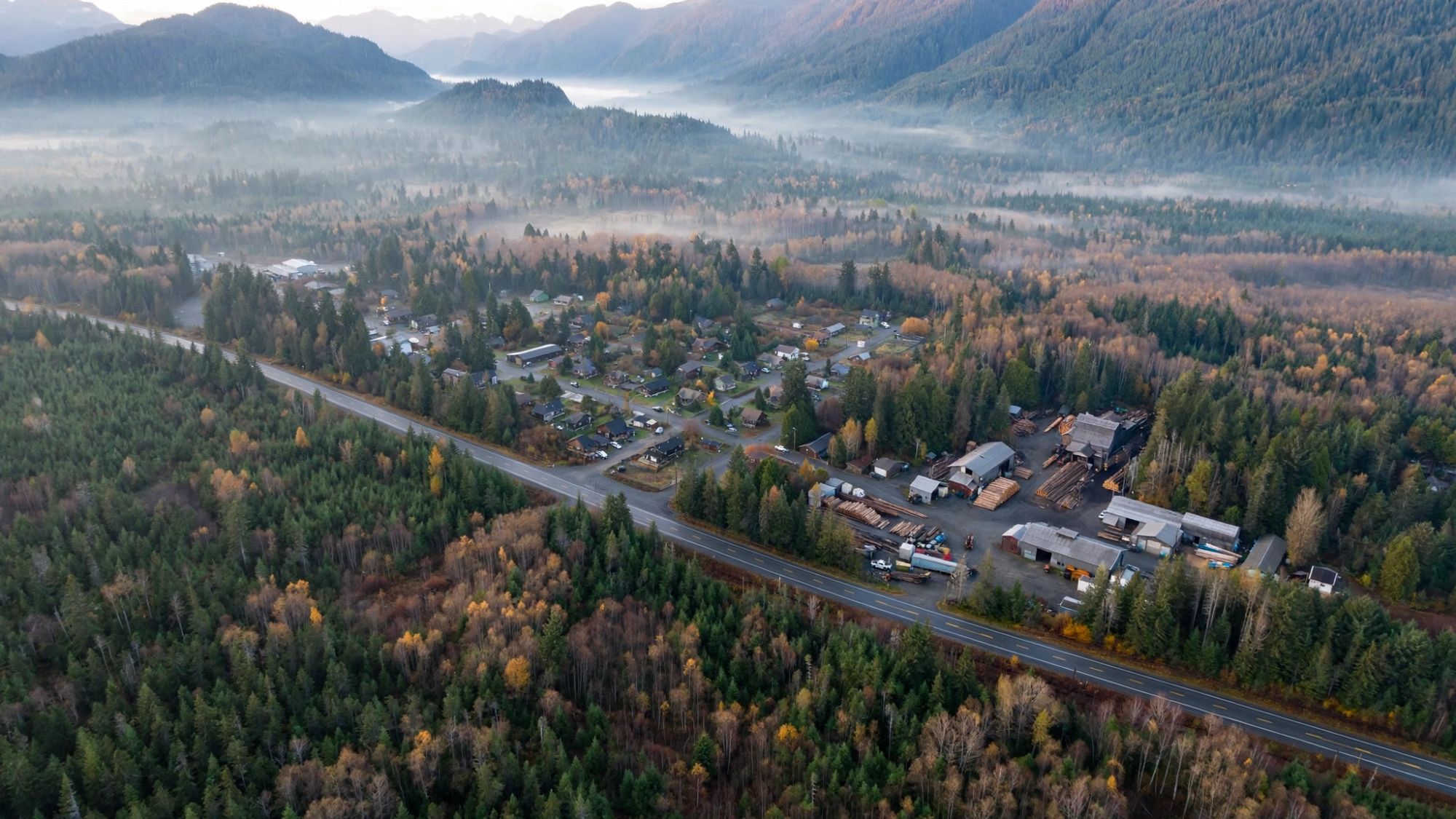
IREN picked northern BC for three practical reasons: clean hydroelectric power, a cold climate that makes cooling cheaper, and land with grid connections already in place. Its BC sites run on 100 percent renewable energy, and the company owns its land and electrical infrastructure at each campus.
Power is the whole game in AI data centres. A single modern GPU cluster can use as much electricity as a small town, so the cheapest reliable power wins. BC Hydro's grid gives northern BC an advantage that is hard to copy, and it is one reason these sites were built here in the first place, back when they were mining bitcoin.
The cold helps too. Cooling is one of the biggest running costs of a data centre, and northern BC air does a lot of that work for free for much of the year. That is also why the new builds use liquid cooling: the newest NVIDIA systems run so hot that air alone cannot keep up, and liquid-cooled halls are now the standard for top-end AI hardware.
The third piece is the grid itself. The North Coast Transmission Line, a 500 kilovolt line running from Williston to Glenannan, broke ground on September 3, 2026, with about $6 billion estimated for phase 1 and $3.9 billion committed by Ottawa and Victoria toward phases 1 and 2. More transmission capacity makes the whole region more attractive for power-hungry industry, and data centres are near the top of that list.
How many jobs do these data centres create?
Data centres create fewer permanent jobs than a mill or a mine, but the jobs they do create are skilled and well paid, and the construction phase brings far more workers than the finished building. Mackenzie's site employs about 60 people now, with at least 75 expected next year, according to the town's mayor.
That is the honest shape of it. A data centre is mostly machines. The permanent team is technicians, electricians, network specialists, and security, not hundreds of shift workers. The bigger employment effect comes in waves: construction crews for each new hall, contractors for retrofits, and the suppliers and services that support the site.
What matters for housing is not the headcount at one building. It is the direction of travel. Every new hall means another round of construction workers who need a place to stay, and every permanent hire is a household that needs a home, often relocating from somewhere else. In a city where rental vacancy has been tight, even a few dozen new households show up in the rental market first.
| IREN BC campus | Power | Operating since | What is happening now |
|---|---|---|---|
| Prince George | 50 megawatts | September 2022 | AI conversion underway, air-cooled GPU fleet commissioned, new 10 megawatt liquid-cooled hall under construction for NVIDIA GB300 systems |
| Mackenzie | 80 megawatts, now described as a 100 megawatt site | April 2022 | GPUs being installed, new liquid-cooled data centres under construction, about 60 jobs now |
| Canal Flats | 30 megawatts | 2019 | Original BC site, being converted to liquid cooling for GB300 systems |
Sources: IREN press releases and results, September 22, 2025 and November 5, 2026; IREN quarterly filing, May 2026; IREN earnings calls, August 27, 2026 and November 5, 2026.
What does this mean for Prince George home prices?
Nobody can honestly say an AI data centre will push Prince George home prices up by a set amount, and anyone who gives you a number is guessing. What is verifiable is that new skilled jobs and construction crews add housing demand in a market that is balanced today, with 1,248 sales in Prince George city in the 12 months to October 2026 and a median sale price of about $465,000.
Here is the market those new households are walking into, from the BC Northern Real Estate Board Stats Centre:
| Prince George market snapshot | Figure | What it means |
|---|---|---|
| Sales, Prince George city, 12 months to October 2026 | 1,248 | Down 2.5 percent from 1,280 the year before, a cooler market than the 2022 peak |
| Median sale price, Prince George city, 12 months to October 2026 | About $465,000 | Up about 2.3 percent from the prior 12 months |
| Median days on market, Prince George city | 17 days | Homes are selling in under three weeks at the median |
| Months of supply, Prince George city | 5.5 months | Balanced market, neither a clear buyer nor seller market |
| Sales, Prince George city and rural, October 2026 | 138 | With 760 active listings that month, about 6.1 months of supply |
Source: BCNREB Stats Centre, Prince George City Areas 71 to 75 and Prince George City and Rural Areas 71 to 80, all property types, 12 months to October 2026, pulled November 25, 2026.
A balanced market is the key point. At 5.5 months of supply, Prince George is not in a bidding war market, and it is not a market where homes sit unsold either. New demand lands differently depending on where it shows up. Some neighbourhoods are already tight: Prince George City West, for example, sat at 2.8 months of supply with a median sale price of $438,000 and a median of 12 days on market over the same 12 months. If relocating workers look in the same few areas, those pockets feel it first.
The rental market feels it before the resale market. Construction crews and new hires rent first and buy later, if they buy at all. That is worth knowing if you own a rental, and it is worth knowing if you are renting and thinking about buying: the pressure shows up in rents and in competition for the same starter homes.
Should you buy now, sell, or wait?
If you are buying to live here, the data centre news is a reason to pay attention, not a reason to rush. If you are selling, it is a reason to price on today's comparable sales, not on a story about what might happen next. Your own timeline, job, and budget matter more than any single project announcement.
For buyers, the practical read is simple. A balanced market with 17 median days on market means good homes still move, but you are not forced into a panic decision. Get pre-approved, know your budget, and watch the neighbourhoods where relocating workers are likely to look. If you work at or near the data centre sites, or you are relocating for one of these jobs, talk to us early, before the next construction wave starts.
For sellers, the same honesty applies in reverse. One project announcement does not add a premium to your home. What sells a home in Prince George right now is condition, price, and location, in that order. The buyers who do arrive because of these projects will still compare your home against the ones down the street, and they will still get an inspection.
For investors, the rental angle is the real one to watch. New workers need rentals before they need mortgages, and a tight rental market rewards landlords who buy well and maintain their properties. Run the numbers on the actual rent, not on a headline.
What should you watch next?
Watch three things: whether IREN confirms more construction phases at Prince George beyond the liquid-cooled hall already underway, whether Mackenzie's hiring grows past the 75 jobs the mayor expects, and whether Prince George's months of supply tightens in the monthly Stats Centre numbers.
Those three numbers will tell you more than any announcement. Construction phases mean cranes and crews. Hiring numbers mean households. Months of supply tells you whether demand is actually outrunning listings, or whether the story is running ahead of the market.
We will keep tracking this series one project at a time, with the same rule every time: only facts that can be checked, in plain language, with the Prince George housing angle spelled out. If you are moving here for work at one of these sites, or you own a home near them and want to know what it is worth today, that conversation starts with real numbers, not a headline.
Talk to us!
Get the Home Buyer Guide: https://livinginprincegeorge.com/ultimate-home-buyers-guide
Book a call with Evan: https://bit.ly/Book-A-Call-With-Evan
Book a call with Marc: https://bit.ly/AskMeAnythingRE
Call Evan at 778-910-9655 or Call Marc at 250-251-5800
Evan McLeish and Marc Posselt, Prince George REALTORS with EMP Collective, eXp Realty.
Categories
Recent Posts