Living in University Heights: 11 Pros & Cons for Families, Professionals & Investors (Prince George 2025-2026)
The quick verdict (TL;DR)
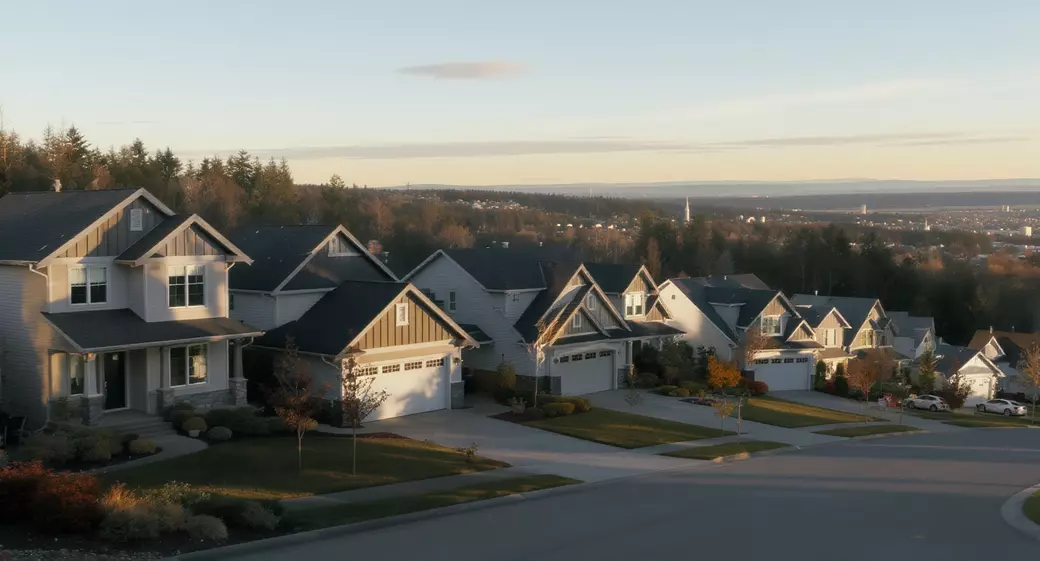
If you want a quiet, modern, nature-forward community next to UNBC with premium single-family homes (often with income-helping suites), University Heights (Prince George, BC) is a standout. It’s car-dependent, but you trade walkable coffee runs for 5–15 minute drives to everything, top-tier recreation on campus, and strong value protection from strict design guidelines.
Who this guide is for (in your words)
You’re a first-time buyer, growing family, relocator, investor, or downsizer who wants a secure, supported, low-stress experience with proactive education (guides + videos) and clear next steps. That’s our entire service model.
11 Pros Of Living In University Heights Prince George
- Proximity to UNBC
Live essentially “on campus” without living on campus. UNBC is 2–5 minutes by car; Route 16 transit loops UH ↔ UNBC ↔ College Heights. Great for students, staff, and anyone who wants lectures, events, and sport facilities nearby.
Deep Dive
Living in University Heights means you’re essentially next door to the University of Northern British Columbia , a 2–5 minute drive via Tyner Boulevard, and that single fact reshapes day-to-day life for families, professionals, and investors alike. For UNBC faculty and staff, it’s a stress-proof commute that protects your schedule in every season; for parents, it’s the difference between sprinting to after-school activities and simply cruising up the hill. Even if the wider neighbourhood is intentionally suburban and car-first, the campus connection is unusually convenient: BC Transit’s Route 16 runs a circular loop linking the UNBC transit exchange, University Heights stops (e.g., “Tyner Blvd at University Heights Dr”), and the College Heights amenities cluster, with ~30-minute weekday headways and a ~34-minute loop time; from the UNBC exchange you can hop to other routes (like Route 15 to Downtown), and students have U-Pass for unlimited rides making transit a realistic campus commute or errand backup. Active options are viable for campus-specific trips, too, thanks to the multi-use path along Tyner and the UNBC Greenway interface, so biking or a fair-weather walk to lectures, labs, or events is actually in play. The proximity also unlocks lifestyle perks: the Charles Jago Northern Sport Centre with modern fitness, drop-in classes, two squash courts, and the only indoor running track in Northern BC sits on campus minutes from your driveway, turning year-round fitness into a routine rather than a project. Finally, the university itself is a steady economic engine: UH’s modern homes commonly include legal secondary suites designed with the UNBC renter in mind, and that durable tenant pool helps owners reduce vacancy risk and stabilize cash flow , one reason the area sustains a premium profile in the local market.
- Premium, master-planned community (value protection built-in)
UH isn’t ad-hoc: it’s guided by a neighbourhood plan and legal Design Guidelines to keep quality high and streetscapes cohesive — an explicit mechanism to protect long-term value.
Deep Dive
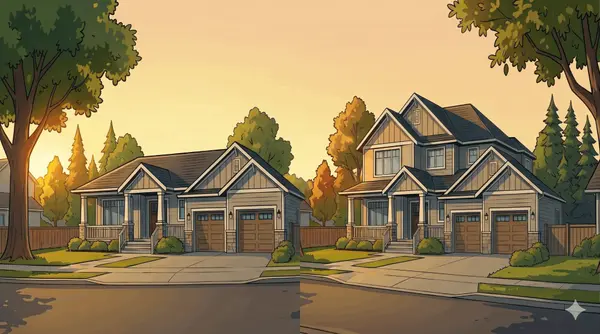
University Heights isn’t piecemeal growth it’s a deliberately engineered, master-planned subdivision guided by a neighbourhood plan and legally binding design guidelines that keep quality high and streetscapes cohesive on purpose, not by accident. Those rules require architecturally balanced facades with subdominant garages, topography-sensitive site planning, and modern materials/landscaping standards so one outlier can’t drag down the whole street. The land-use plan also locks in the nature-forward feel long-term by permanently reserving a large share of the area for parks, greenbelts, trails, and protected riparian corridors enduring amenities that surround homes rather than future building pads. For families and investors, this creates real predictability: phased communities like The Ridge (with additional lots released over time) and The Headlands map out what’s coming and where, while the housing form remains predominantly newer single-family homes on generous ~7,500–10,000 sq. ft. lots with a few multi-family strata sites for variety. The net result is a premium neighbourhood where design continuity, greenspace protection, and controlled supply work together to safeguard homeowner value and support steady demand one of the key reasons University Heights consistently shows fast, competitive market performance compared with more heterogeneous areas.
- Lots of greenspace by design (~34% preserved)
Nearly 29% of land is permanently parks/greenbelts/trails + ~5% riparian/wildlife protection, locking in the nature-centric feel long term.
Deep Dive
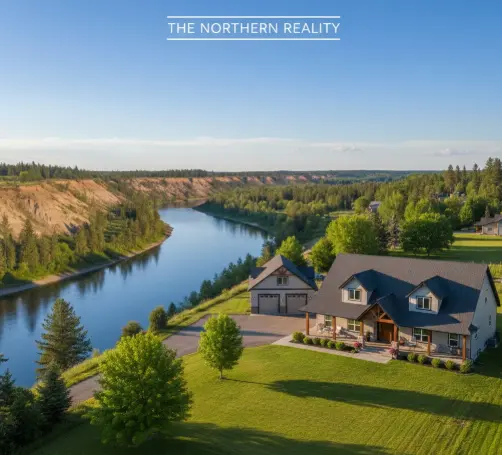
One of the biggest quality-of-life wins in University Heights is how much nature is permanently protected inside the neighbourhood fabric itself. Roughly a third of the land base is locked in as parks, greenbelts, trails, and riparian corridors, which means you’re not buying next to “future Phase X,” you’re buying beside scenery that stays scenery. Practically, that gives families quieter streets, cooler microclimates in summer, and built-in privacy without needing acreage. It also creates safe, car-light movement options for kids and dog-walkers via interconnected paths rather than busy arterials. From an ownership perspective, this preserved green edge acts like a neighborhood-wide amenity that every resident gets to enjoy and because it’s protected in the plan, it supports long-term desirability and helps listings hold their curb appeal as the community reaches build-out.
- Real outdoor lifestyle at your doorstep
UNBC Greenway + Forests for the World connect right from the neighbourhood, with lookouts, picnic areas, and popular MTB trails; upgrades planned for Chancellor Park add more play space for families.
Deep Dive
If your ideal weekend is “back on the trail in under ten minutes,” University Heights makes that a weekday reality. The UNBC Greenway and Forests for the World connect directly from the subdivision, so quick hikes, stroller loops, sunset lookouts, and mountain-bike spins can be spontaneous, not scheduled. Families get easy “micro-adventures” with pocket parks and the planned upgrades at Chancellor Park, which turn 30 spare minutes into an energy-burner for kids. The mix of paved multi-use paths and forested single-track keeps everyone happy from runners and cyclists to grandparents out for a flat, scenic walk while the proximity means you’re building consistency without the pack-the-car friction that kills momentum.
- Serious recreation: Northern Sport Centre
On campus you get the region’s flagship facility: modern gym, classes, two squash courts, and the only indoor running track in Northern BC.
Deep Dive
Consistency is the secret ingredient in any fitness routine, and the Charles Jago Northern Sport Centre removes almost all excuses. Minutes from your driveway, you’ve got a modern gym, group classes that actually fit a working family’s schedule, two squash courts, and the only indoor running track in Northern BC for year-round training. Parents will love the quick drop-off/pick-up rhythm for youth programs; professionals can slot in a 45-minute workout between meetings; and if you’re rehabbing an injury or training specific events, the facility depth makes it simple to progress without driving across town. It’s the kind of “always there” amenity that quietly upgrades everyday life.
- Strong K–12 options within ~10 minutes
École College Heights (French Immersion), Malaspina, Polaris Montessori, Southridge and College Heights Secondary (large program menu; top local ranking).
Deep Dive
School choice is real here—and close—so you can select the best fit without committing to cross-town commutes. On the elementary side you’ve got French Immersion at École College Heights, a Montessori pathway at Polaris, and solid neighborhood options like Malaspina and Southridge. For Grades 8–12, College Heights Secondary anchors the area with a broad academic menu (AP/Honours), deep electives in arts/tech/careers, strong athletics, exchanges, and leadership programs. The practical win is time: shorter drop-offs, less juggling, and an easier path to after-school practices—all while giving kids distinct learning environments to choose from as needs evolve.
- 5–15 minute drives to daily needs
Save-On, banks, pharmacies, fast-casual + big-box clusters (Walmart, Home Depot, Canadian Tire) are a quick run down the hill. Efficient if you’re okay with driving.
Deep Dive
University Heights is intentionally residential, but the everyday stuff is clustered so tightly nearby that errands become efficient loops rather than projects. Groceries, pharmacies, banking, coffee, and casual dining are a short hop in College Heights; big-box runs live just a bit farther in Southridge. In winter, that compact routing matters—you can knock out multiple stops without crossing the whole city. The trade-off is clear: you won’t stroll to a café, but you will get your Saturday list done in under an hour, and that reliability adds up over hundreds of small trips per year.
- Investment upside: legal suites + steady rental pool
UNBC creates durable rental demand. Homes with legal suites often enjoy low vacancies and reliable cash flow — a key reason investors target UH.
Deep Dive
Proximity to UNBC creates a durable, year-round renter base that’s unusually consistent for a suburban neighborhood, and many UH homes were designed from day one with legal secondary suites. For owners who plan to live upstairs, the suite income can soften carrying costs while preserving privacy; for investors, the combination of modern construction, compliant layouts, and reliable demand simplifies underwriting and reduces vacancy risk. The result is a cleaner numbers story whether you’re house-hacking a first purchase or optimizing a small portfolio—and that undercurrent of demand supports the neighborhood’s premium positioning overall.
- Newer housing stock + bigger lots
Modern single-family homes dominate, typically on 7,500–10,000 sq. ft. lots. That’s family-friendly space versus older, tighter infill.
Deep Dive
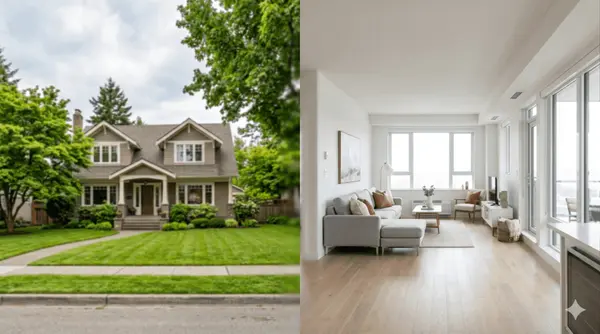
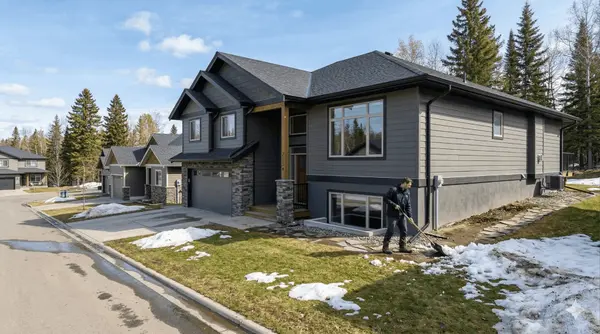
The streetscape here reads “modern Prince George” in the best way: contemporary single-family homes, energy-efficient envelopes, and thoughtful elevations where the front door—not the garage—sets the tone. Typical parcels in the 7,500–10,000 sq. ft. range allow for real backyards, gardening, side yards for gear, and the space families need to breathe. Inside, you’ll find the layouts today’s buyers want: more bedrooms and bathrooms, flexible main-floor spaces, and lower levels that can serve as media rooms, in-law areas, or code-compliant suites. It’s a functional, future-friendly mix that’s tough to find in older, tighter infill.
- Predictable build-out
Phased projects like The Ridge (incl. Phase 6 lots) and The Headlands give buyers clarity on future streets, standards, and supply.
Deep Dive
Buying into a developing area normally means betting on “what might show up later.” In University Heights, you get a playbook instead of a guess. Master-planned phases like The Ridge (with multiple releases already delivered) and The Headlands provide clarity on timelines, streets, and standards, and a single reputable developer overseeing major sections keeps materials, landscaping, and elevations coherent across years. That predictability lowers the risk of a jarring, off-brand build next door and helps families plan school timelines, while investors can forecast absorption and comp sets with more confidence.
- Fast, competitive market signals
2022 snapshot: 17 sales; 99.7% sale-to-list; 27 DOM — a premium enclave where good product moves quickly. (Use this as directional context; we’ll pull fresh comps when you’re ready.)
Deep Dive
When you stack the ingredients—design control, preserved greenspace, campus adjacency, newer product, and limited supply,you get a micro-market that behaves like a premium enclave. Historically, well-priced listings in University Heights have sold close to ask and on shorter timelines than the city average, which is exactly what you’d expect when lifestyle and investment drivers reinforce each other. For buyers, that means prep matters: get pre-approved, move quickly on showings, and structure clean offers. For sellers, professional prep, strategic pricing, and tight marketing typically convert demand into strong results without excessive days on market. Over time, those dynamics help the neighborhood maintain momentum through different cycles.
5 Cons (the honest trade-offs)
- Car-dependent by design
“Very few daily errands” are walkable; think short drives instead of strolls. There’s a multi-use path along Tyner, and Route 16 helps, but ownership of a vehicle is still the norm.
Deep Dive
University Heights delivers a calm, master-planned vibe,but it’s intentionally suburban, which means you’ll rely on a car for most day-to-day errands. There are great multi-use paths for recreation and a useful UNBC transit loop for campus trips, yet the practical rhythm for groceries, banking, and dining is still “short drives over strolls.” In real life, that looks like combining two or three stops in a single 15–30 minute loop rather than walking out the door for a latte. If you’re moving from an urban neighborhood with corner stores and bus lines at every block, this trade-off can feel like a step back in spontaneity. The upside, of course, is the quick-hop efficiency and the quieter streets,but you’ll want to plan for at least one reliable vehicle per adult, winter tires when the snow hits, and a routine built around 5–15 minute drives.
- Limited on-site retail
UH is residential; you’ll rely on College Heights/Southridge for groceries, dining, banking, etc. (usually ~5–10 minutes).
Deep Dive
Part of what keeps UH so peaceful is that it’s purely residential—no internal strip malls, no gas station, no late-night takeout spot around the corner. The cost of that peace is driving to College Heights or Southridge for the basics: groceries, pharmacy, banks, coffee, quick eats, and big-box runs. For some buyers, that’s a non-issue; for others, especially those used to grabbing a last-minute ingredient or walking the kids to a café, it’s an adjustment. The pattern you’ll adopt is “efficient batching”: time errands to happen on the way home from work, after school pick-up, or post-gym. If you value a neighborhood where everything is on the same quiet wavelength and you don’t mind a short drive, this model works beautifully. If your must-have list includes vibrant, walkable retail within the subdivision, UH won’t check that box.
- Premium pricing
Building lots ~$200k–$315k; new builds in The Ridge marketed from the high-$800s to low-$900s (5–7 bed).
Deep Dive
With newer construction, larger lots, design control, and campus adjacency, University Heights tends to price above many older, mixed-stock neighborhoods. That premium can show up in both the acquisition cost and ongoing ownership (think: property taxes on higher assessed values, landscaping expectations that match the streetscape, and occasional guideline-driven upgrade standards). While suites can offset carrying costs and newer builds often save on energy and maintenance, the entry ticket is still higher. The practical takeaway is to underwrite the lifestyle and the numbers together: if you’ll actually use the Northern Sport Centre weekly, leverage the suite income, and value the protected greenspace and quiet streets, the delta in purchase price may be worth it. If you’re purely payment-sensitive and flexible on location, you may find better dollar-per-square-foot value in older pockets of Prince George.
- Architectural constraints
Design control protects streetscapes/value , but limits highly unconventional architecture.
Deep Dive
The same guidelines that protect curb appeal and property values also limit how far you can stray from the neighborhood’s aesthetic playbook. Expect requirements around façade balance, subdominant garages, materials, and topography-sensitive siting,great for cohesive streets, not ideal if your dream is a wildly unconventional frontage, ultra-minimalist façade with no projections, or certain bold colorways. Renovations, additions, and landscaping also need to harmonize with the established standard, which can add steps (and sometimes cost) to your plans. For most owners, the trade is a net win: you’re buying into a look and feel that doesn’t drift over time. But if maximum design freedom is a core value, you may prefer an area with looser controls or a property outside a design-controlled subdivision.
- Not the “average PG” vibe
UH is a distinct, educated micro-culture tied to the university; that’s a plus for many, but different from more mixed, older areas.
Deep Dive
University Heights lives a bit in its own lane,newer homes, educated/professional mix, short UNBC commutes, lots of nature, and a calmer, curated feel. That’s a dream scenario for families and professionals who want quiet predictability and easy access to campus and trails. The flip side is that it can feel less like the heterogeneous, old-and-new blend you’ll experience in more established or central neighborhoods. If your ideal is being right in the thick of downtown events, legacy main streets, and mixed housing stock, UH’s refined profile may feel a touch insulated. None of that is a negative on its own,it’s about lifestyle fit: this is a place that does “serene, organized, and nature-forward” exceptionally well, but it’s not trying to be the city’s eclectic cross-section.
Commute & access snapshot (realistic expectations)
- UNBC: 2–5 min (drive) or Route 16 loop.
- College Heights Plaza: ~5 min (groceries/banking/coffee).
- Downtown PG & UHNBC: ~15 min by car (transit via UNBC exchange).
- YXS Airport: ~20 min by car.
Pricing & inventory (context you can use)
- Lots: ~$200k–$315k (≈7,500–10,000 sq. ft.). New homes at The Ridge marketed ~$899.9k–$929.9k (5–7 bed).
- 2022 resale pulse: 17 sales, 99.7% SP/LP, 27 DOM; mostly newer 3–6 bed homes.
When we meet, I’ll pull today’s micro-comps and absorption so you see where UH sits this week versus College Heights and Westgate.
Bottom line answers by buyer type
- Families: Excellent — modern homes, larger lots, strong schools, parks/trails, sport center, 5–15 minute drives to everything.
- Professionals (incl. UNBC): Excellent — ultra-short campus commute; quiet after hours; top recreation.
- Investors: Highly suitable — suites + durable UNBC tenant base + value protection from design/plan.
What it’s like day-to-day (quick tour)
Drop kids at CHSS practice, hit the Northern Sport Centre track or squash courts, grab groceries at College Heights, and be back on your deck looking over the greenbelt — all in under an hour. That’s the UH cadence.
Call to action (how I help)
If UH fits your lifestyle, I’ll map exact streets that match your must-haves, send a Buyer Guide, and show you cash-flow scenarios if you want a legal-suite home near UNBC. Then we line up a short-list and go see them — zero fluff, full clarity.Categories
Recent Posts